Mikey Replan
Master of Design in Interaction Design — Graduate Interaction DesignPhenomemap
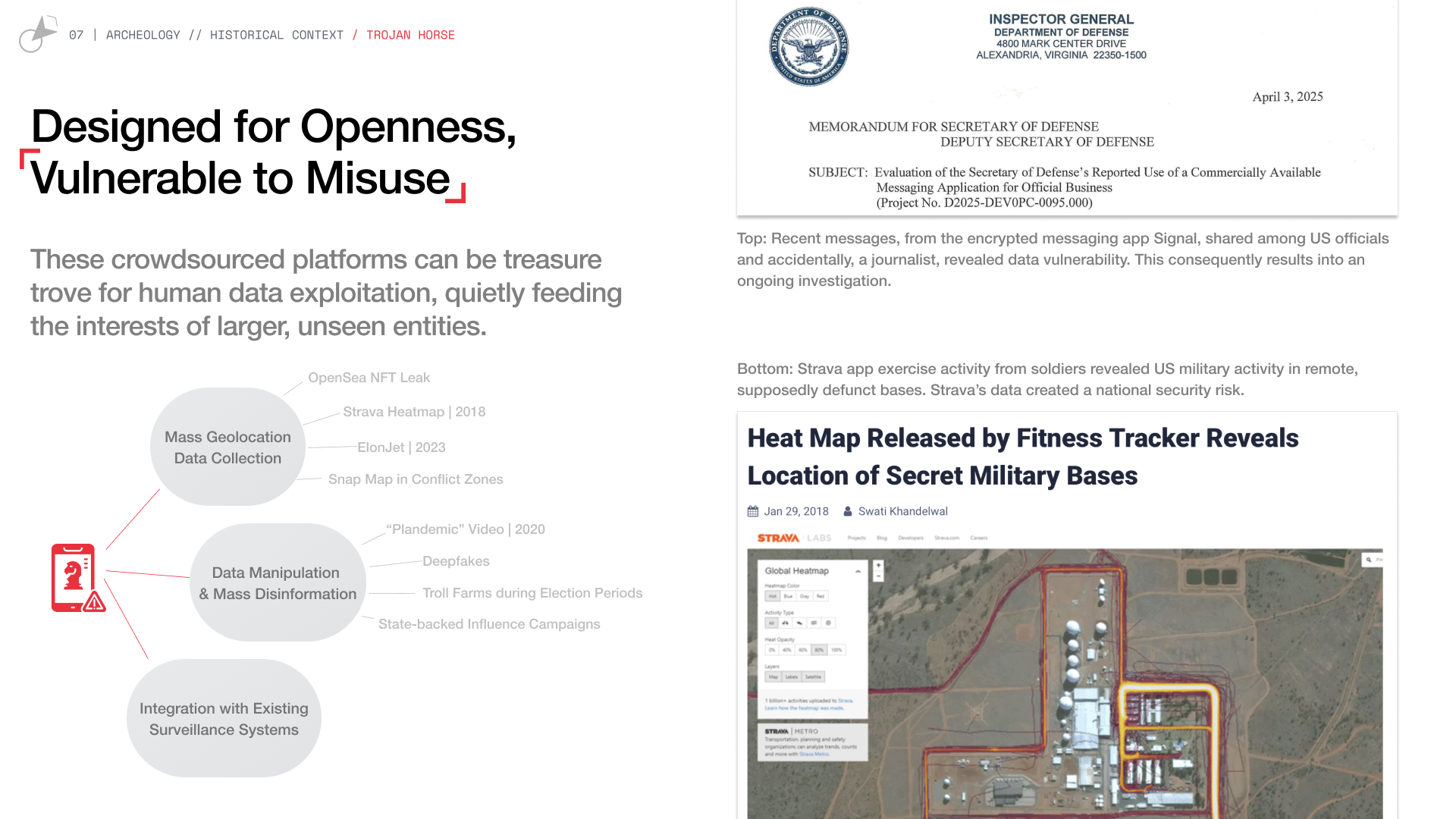
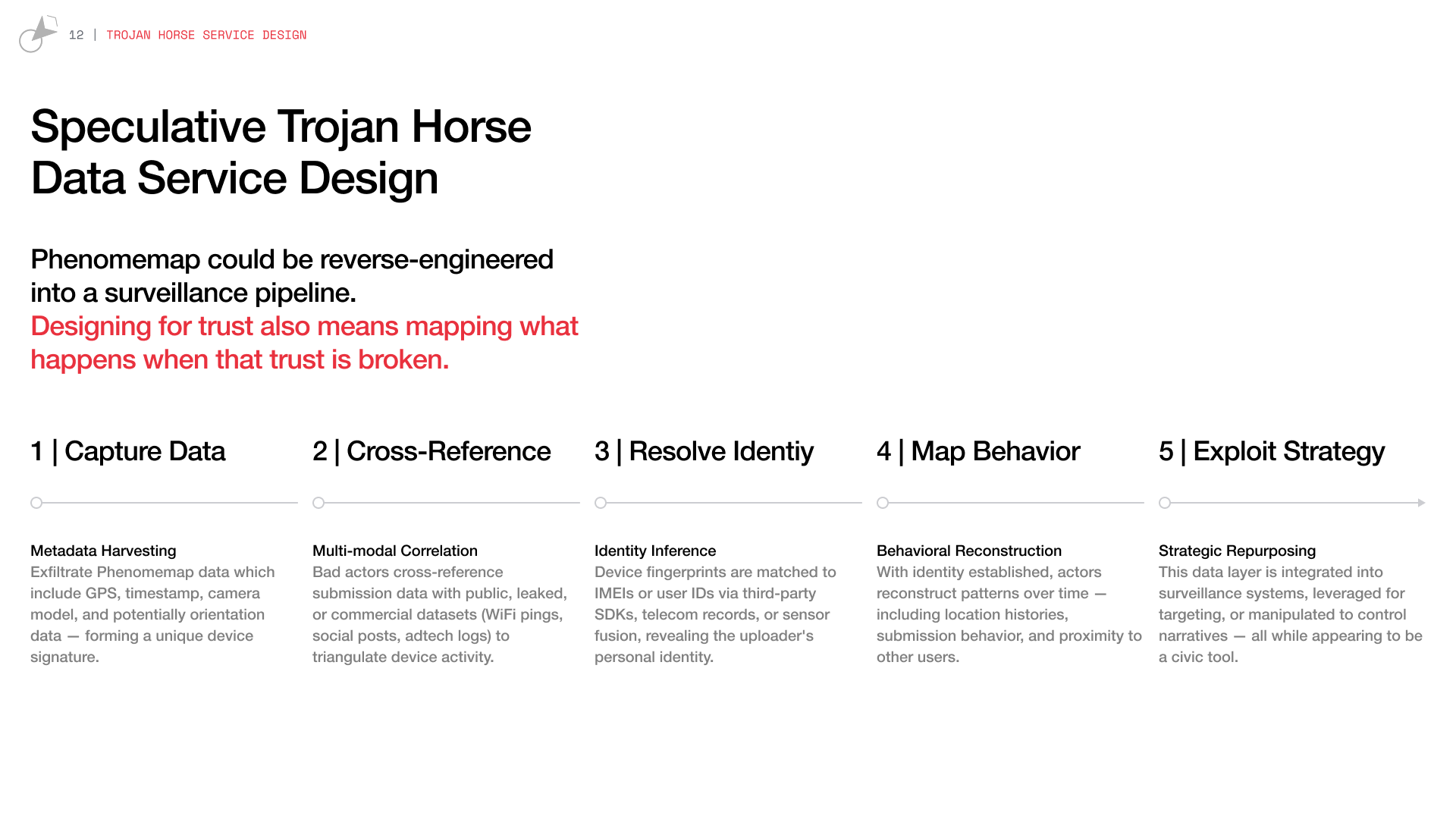
Phenomemap showcases an example of a design "Trojan horse", where a seemingly innocuous design or system is used to subtly introduce a deeper message, concept, or change, essentially "sneaking in" a new idea by disguising it as something readily accepted; it's about using design to subtly influence or disrupt existing systems from within, much like the mythical Trojan Horse in Greek mythology.
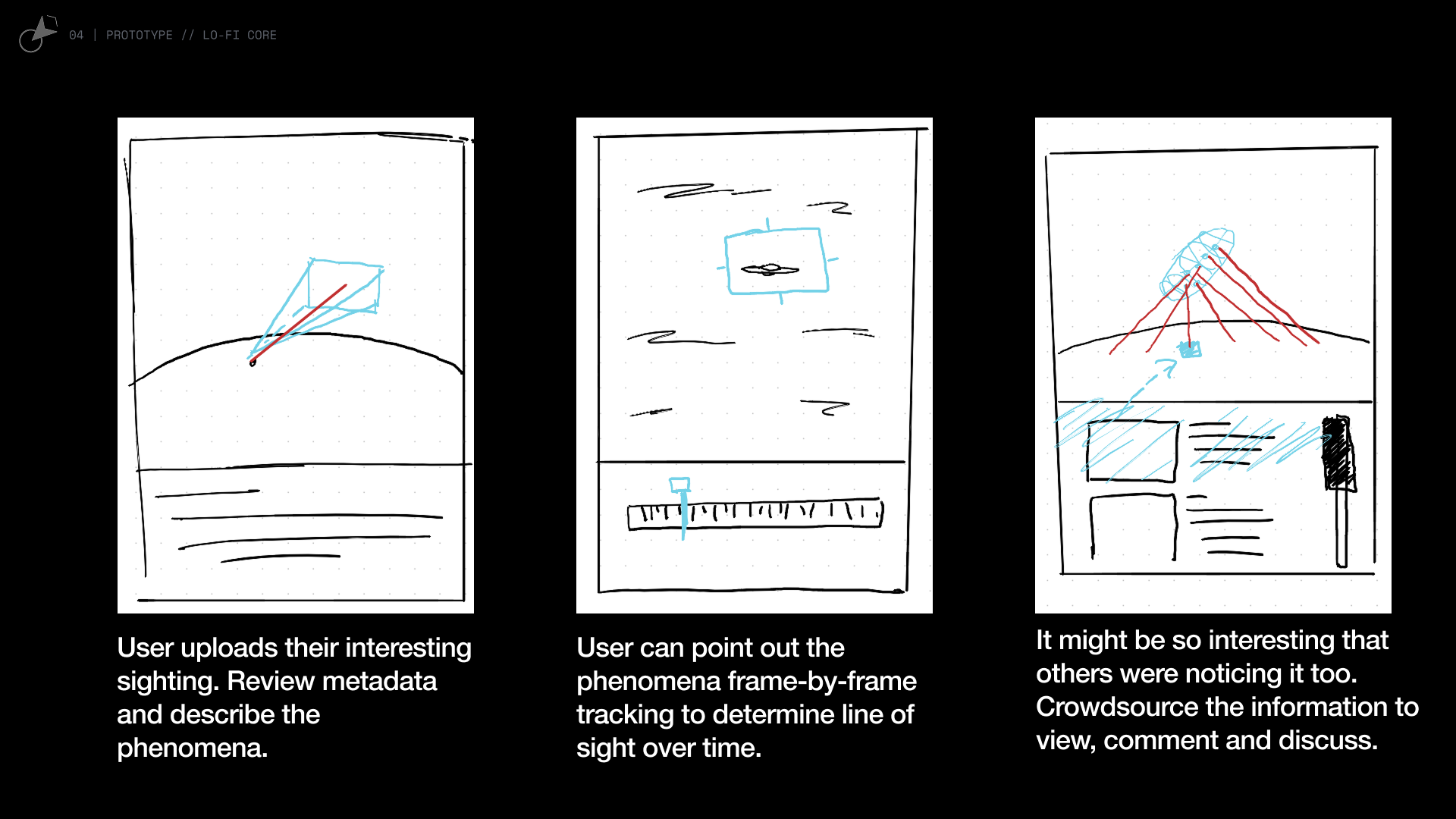
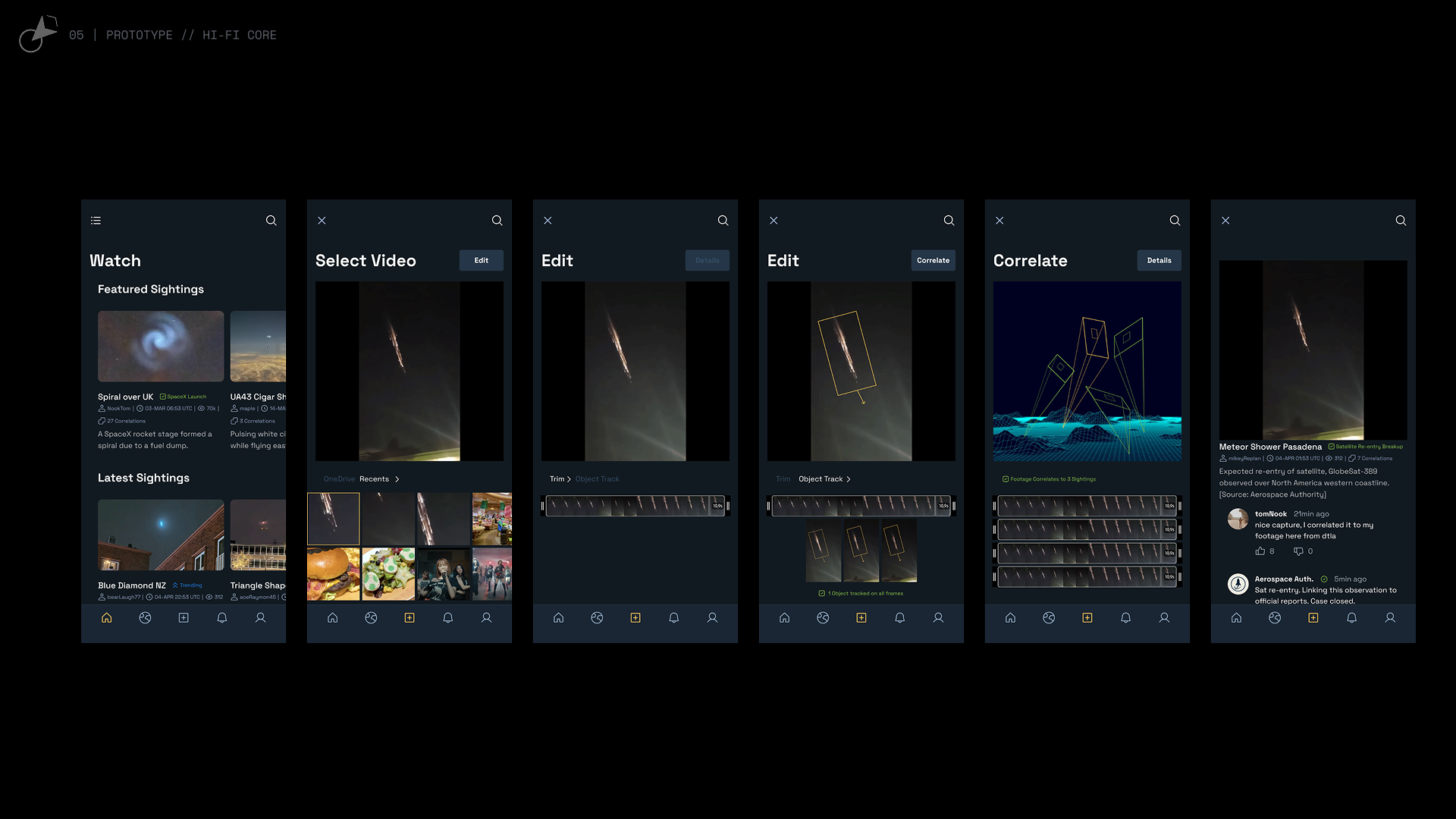
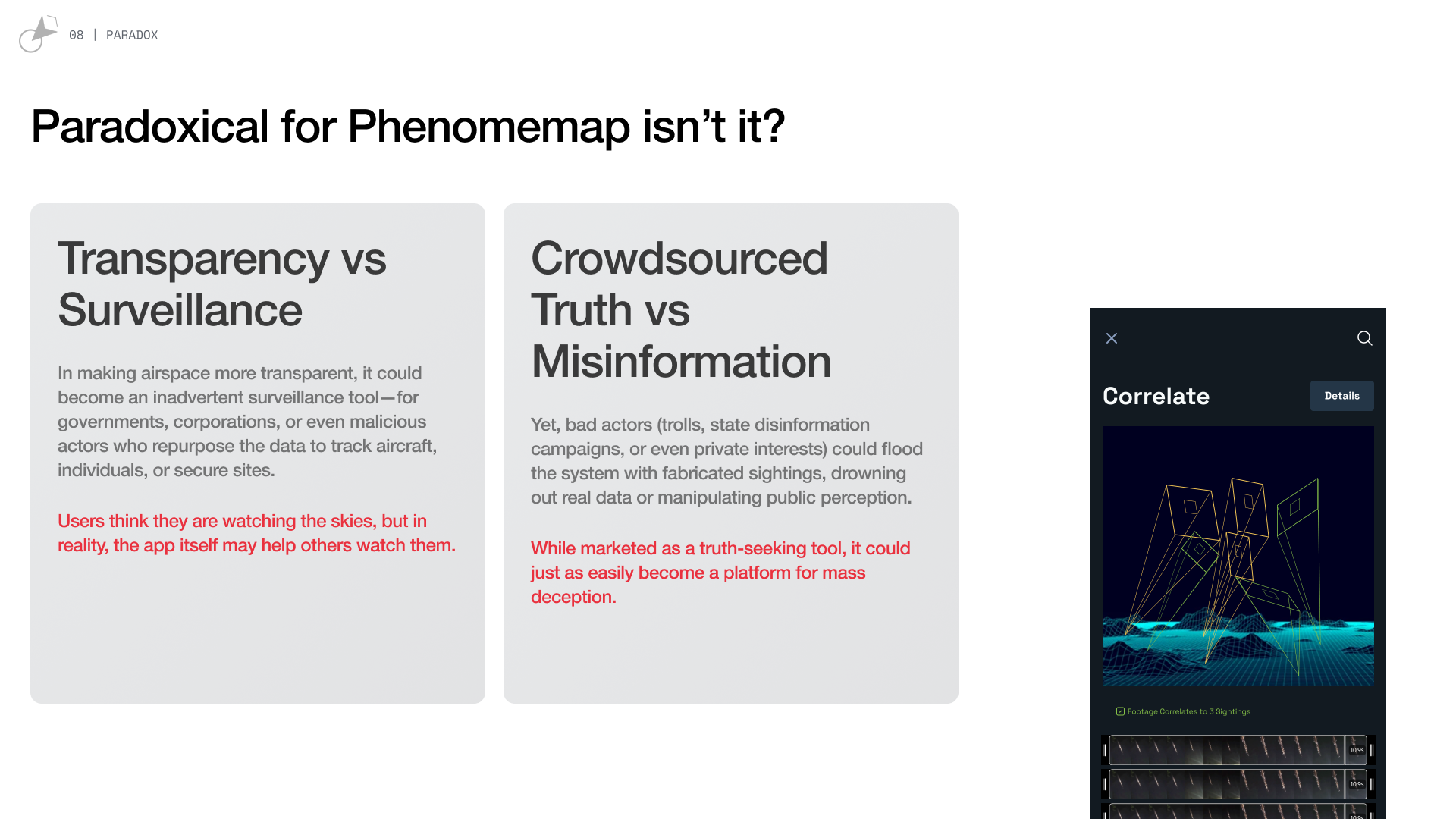
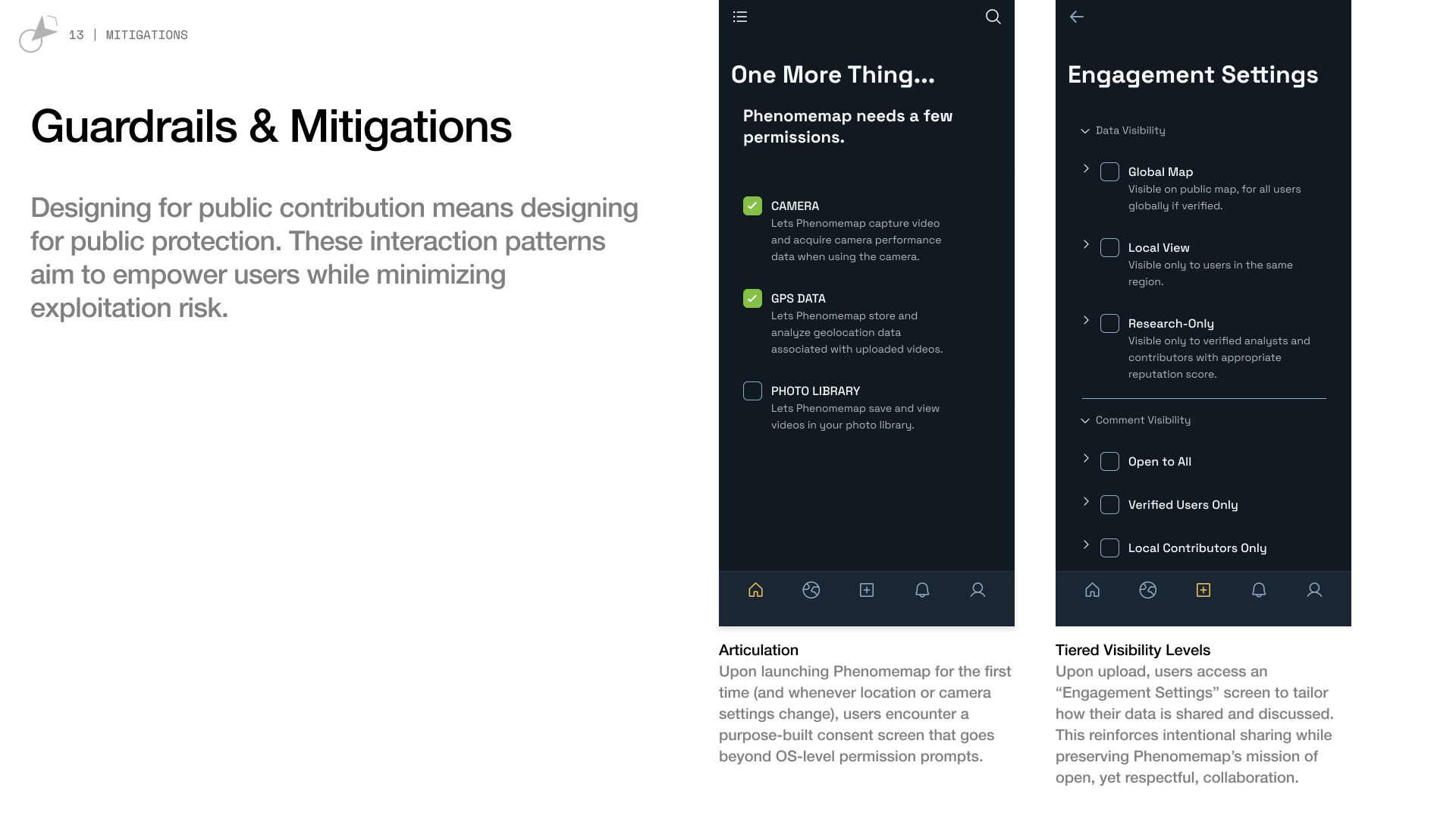
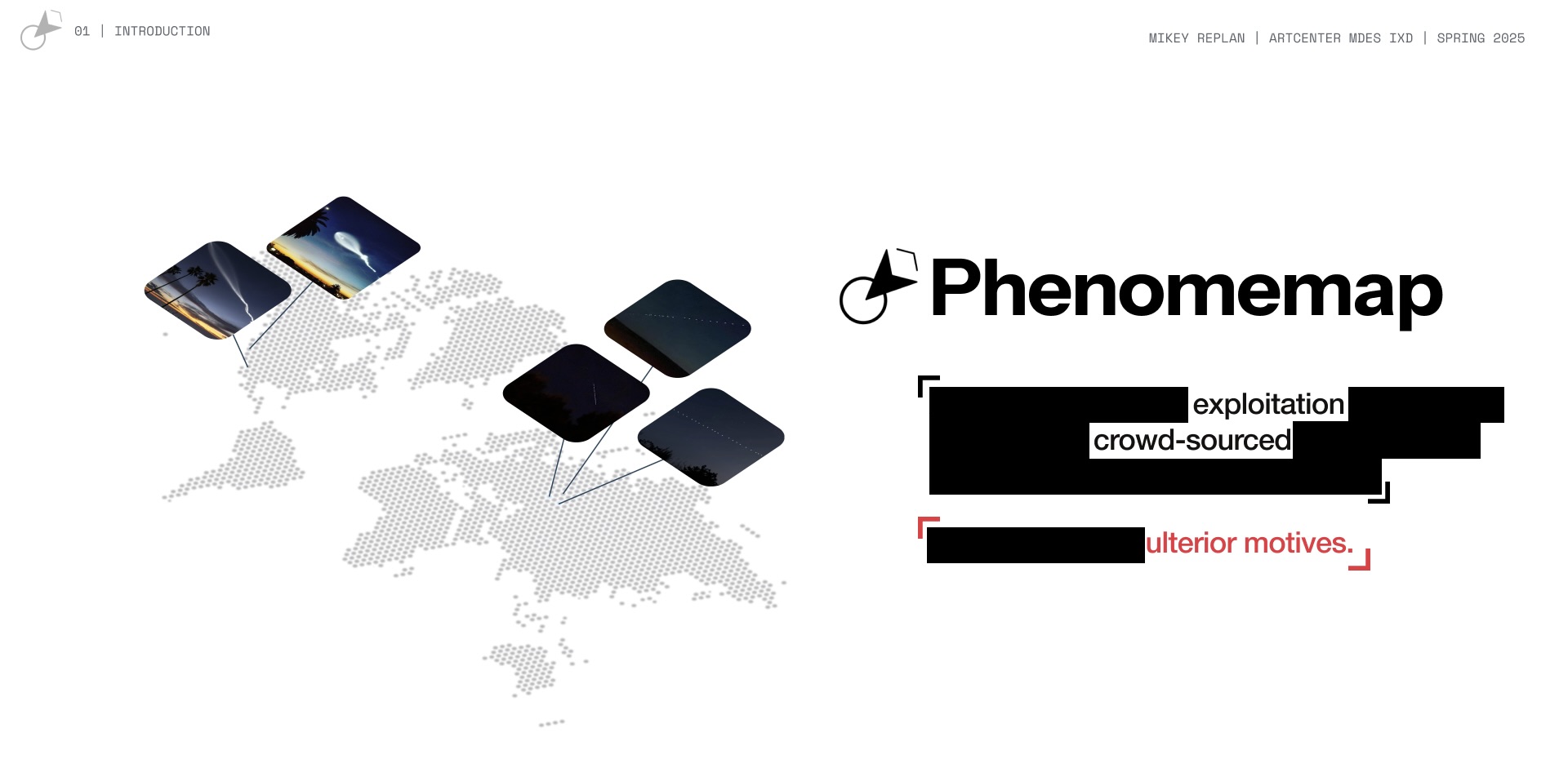
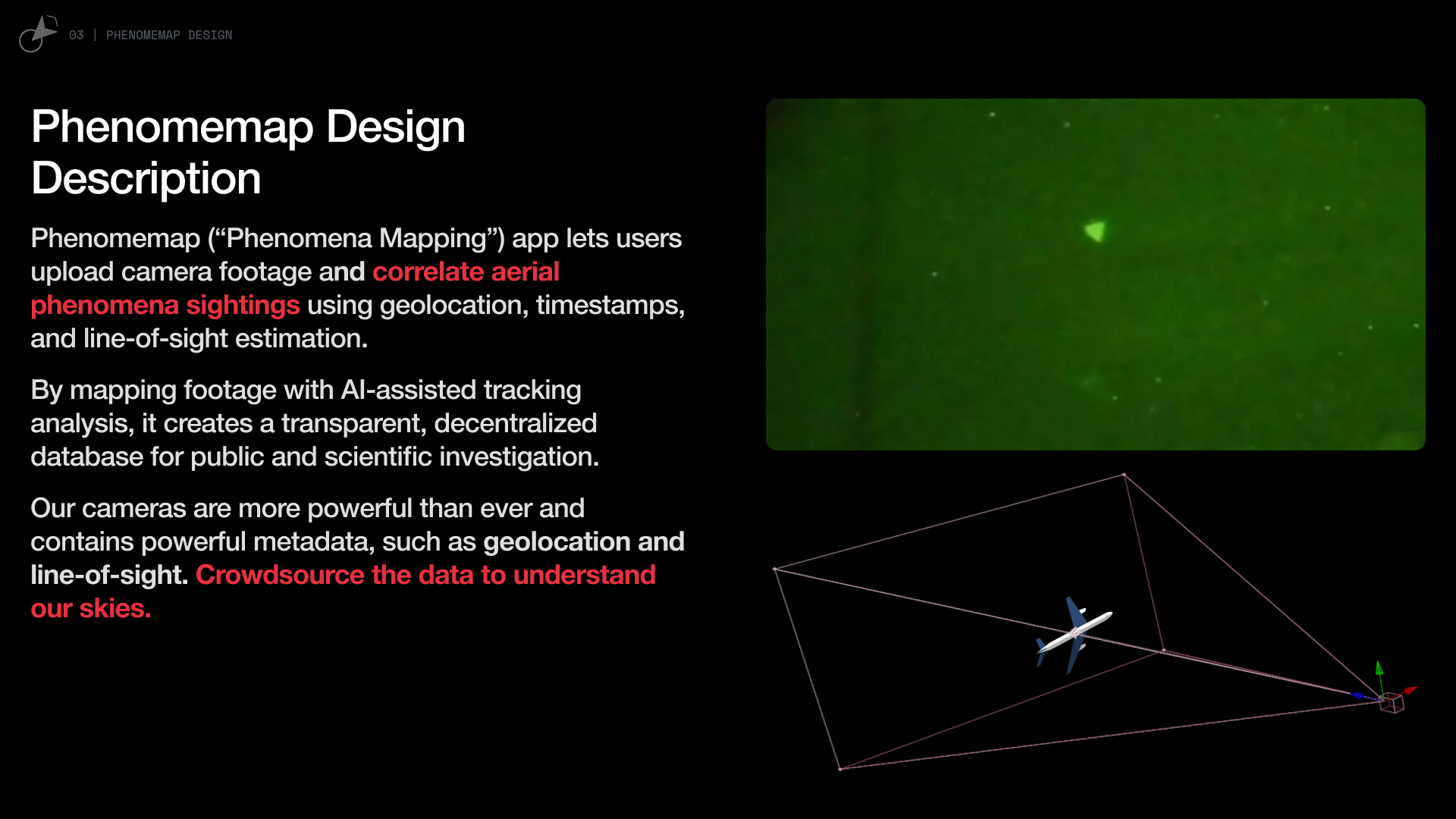
From the surface level, Phenomemap enables users to co-locate unknown aerial phenomena using the very-capable phone camera technology we have available today. However, this capability also illuminates potential entry points to surveillance due to opening up privacy of phone telemetry data as well as how this truth-seeking tool can be a social platform for mass deception.
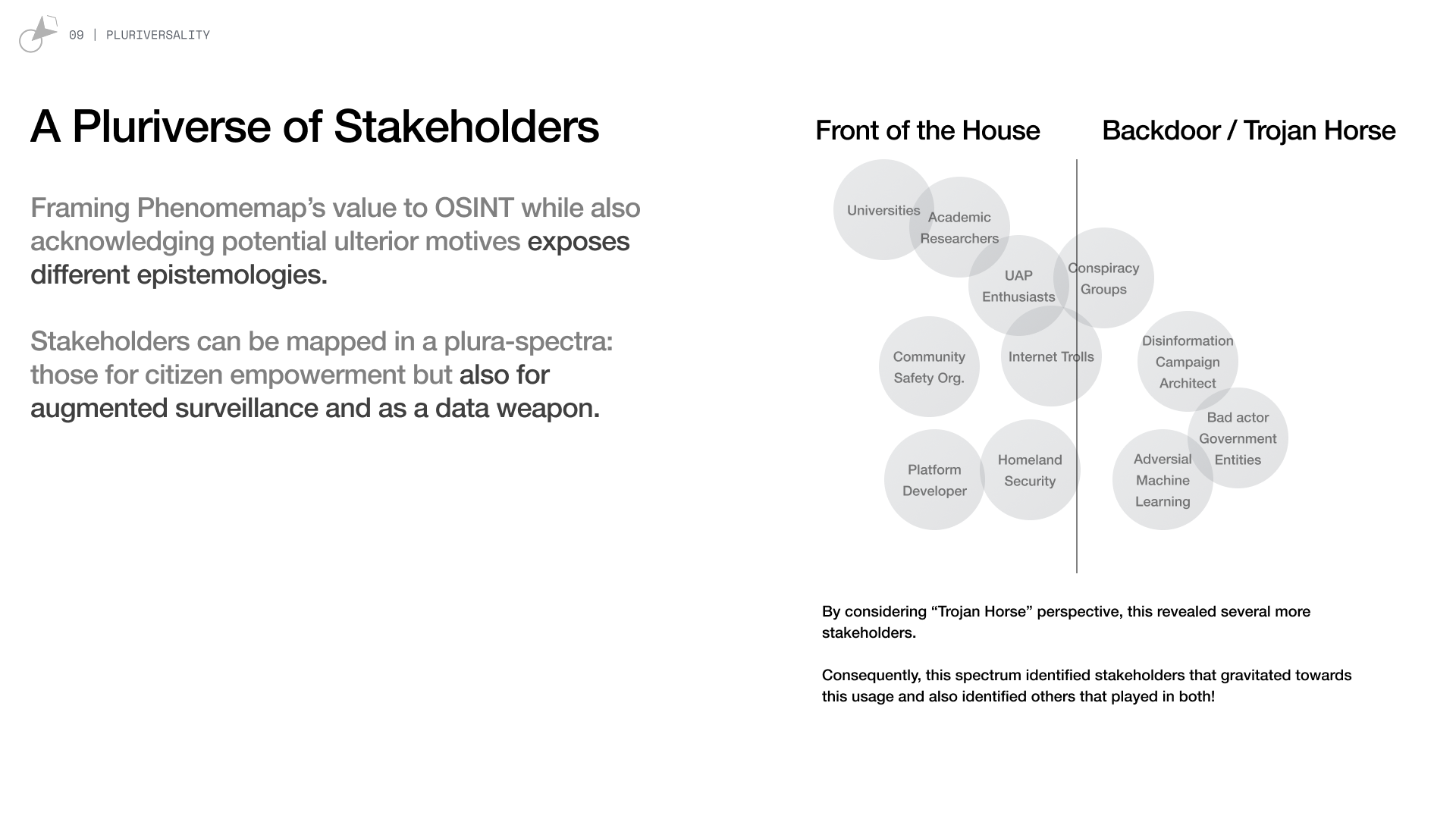
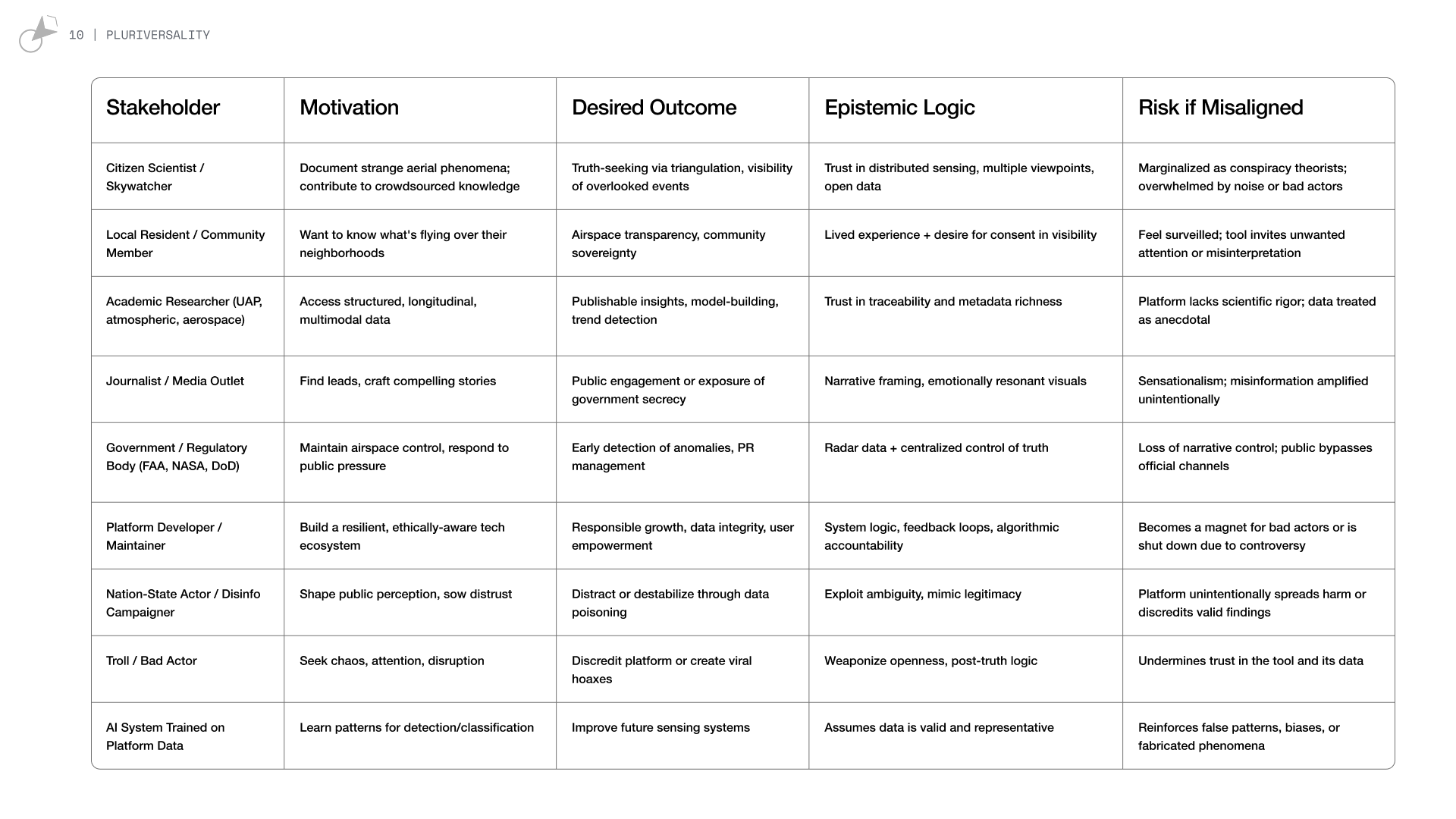
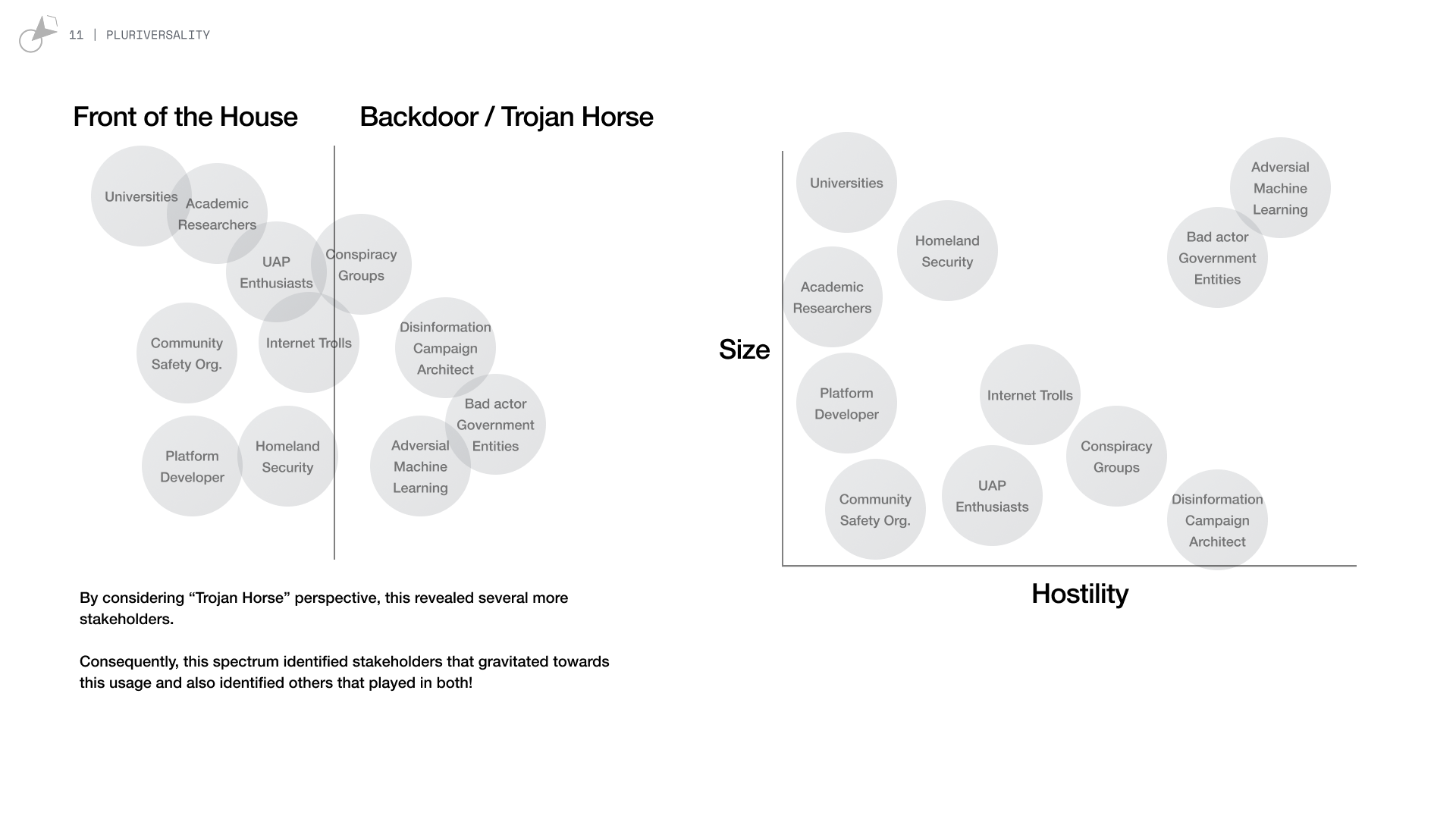
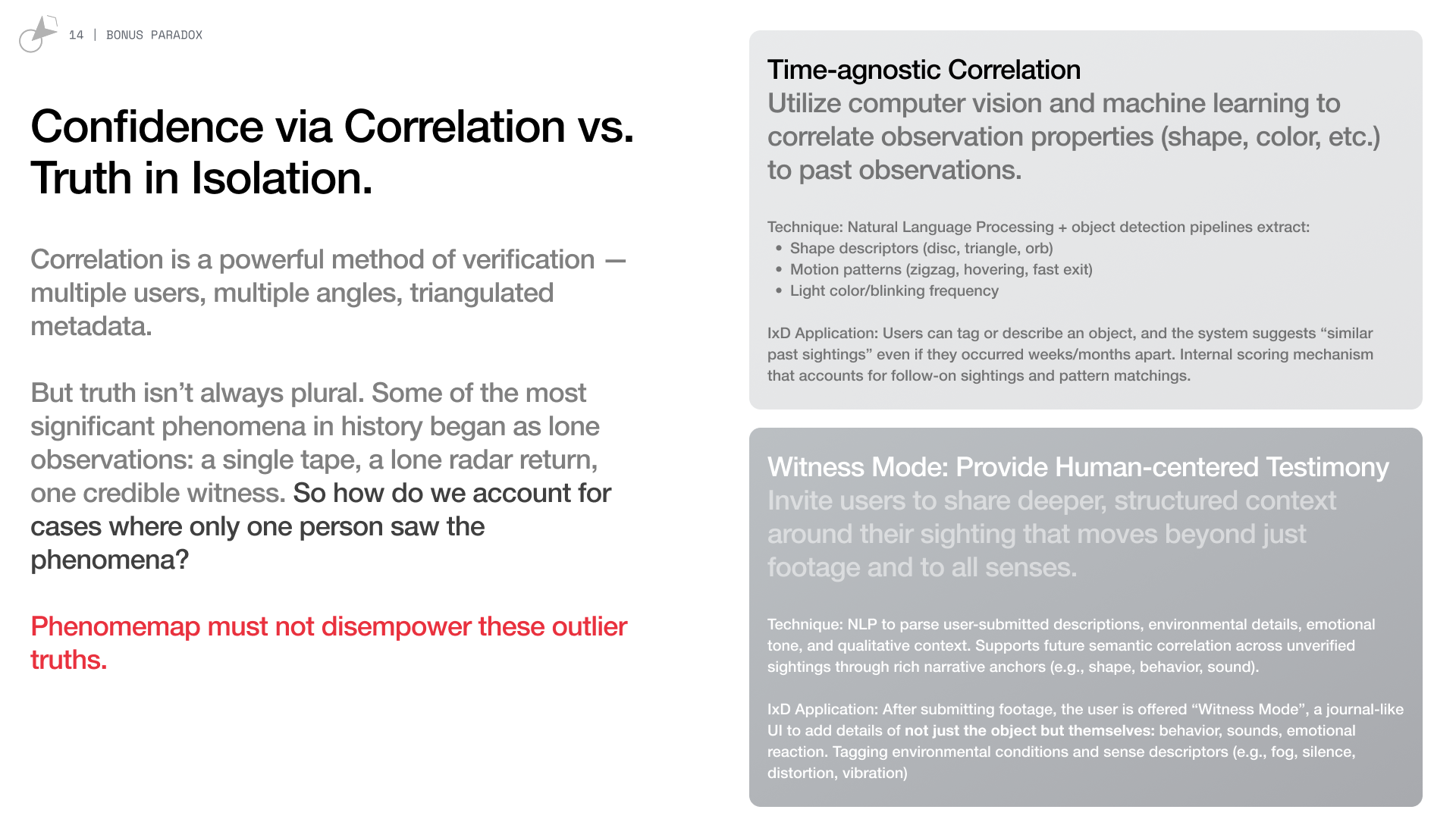
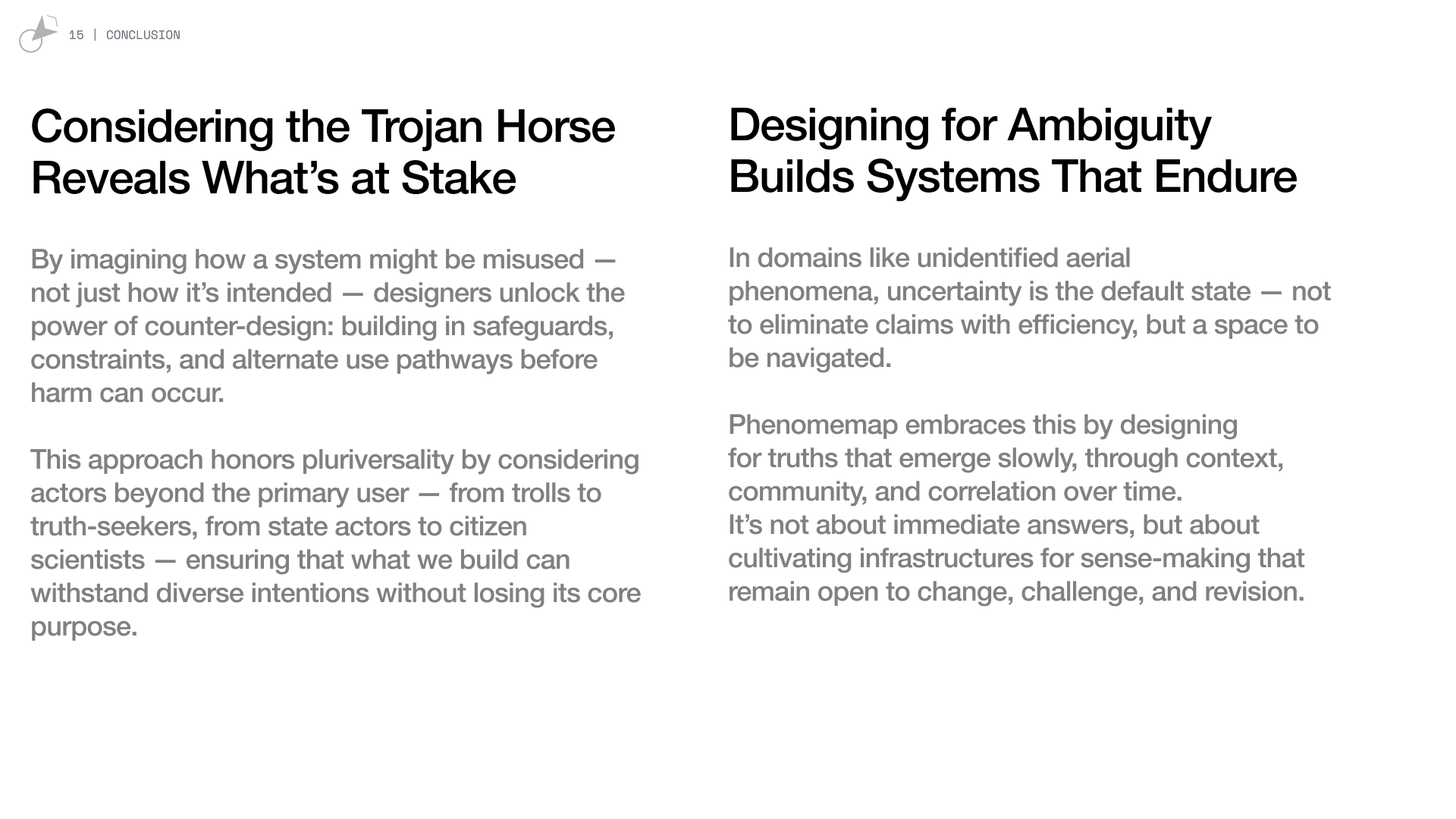
By examining the "Trojan horse" aspects of a system through a pluralistic, multi-stakeholder (including adversarial ones) approach, we can identify deficiencies in the design and reveal deeper discussion on a question that should be asked more: "Should we really build this?".
Pluriversality also means we should consider adversarial stakeholders: we can learn how and why certain stakeholders seek to disrupt and exploit the proposed solution's intended function. They're not edge cases but people and their technologies that operate from a coherent alternative world with its own logic, values, and desired futures. ...it can even question who truly is the adversary.
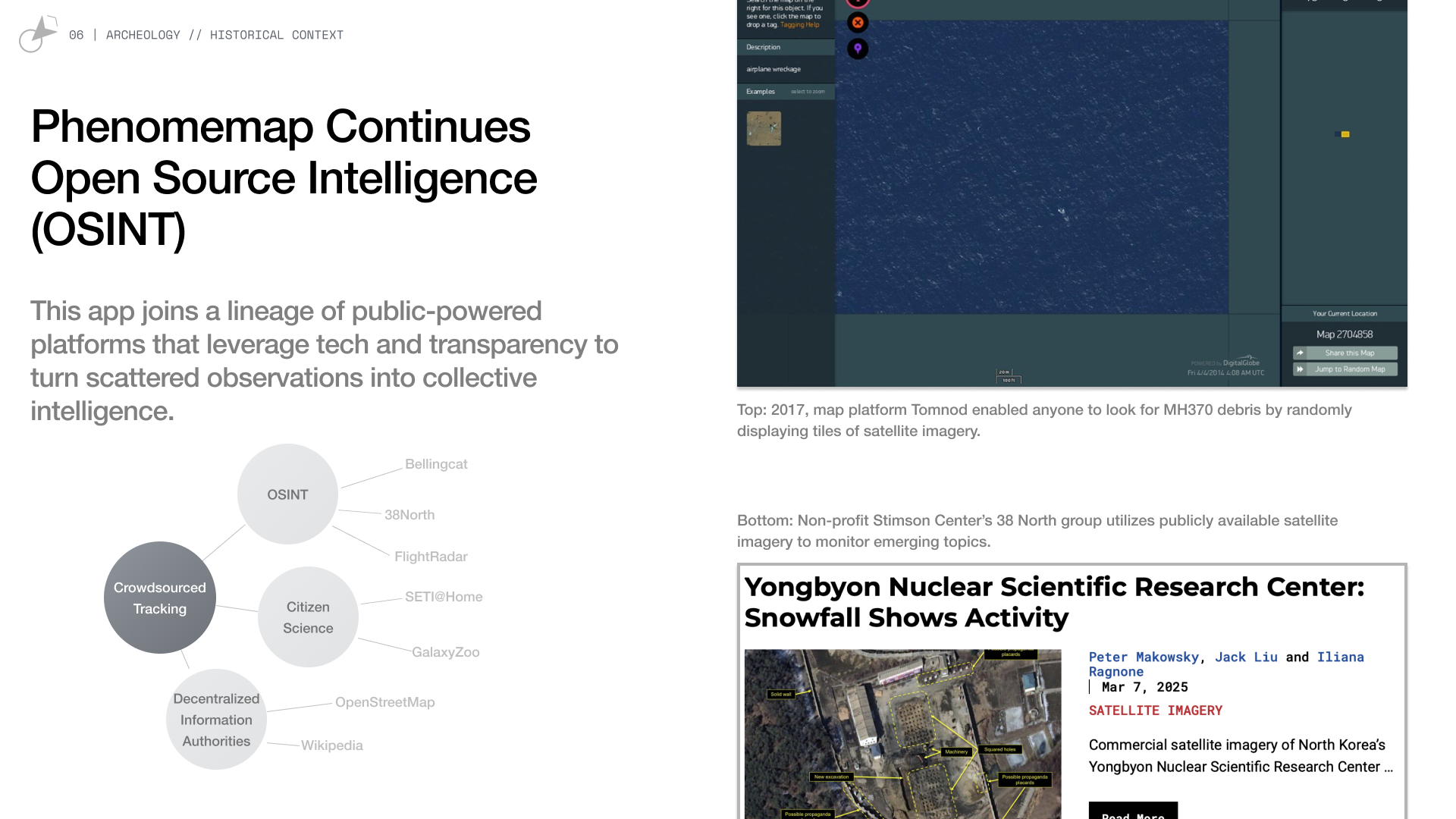
Expanded Systems Thinking: Phenomemap lives in a larger ecosystem of OSINT tools, further pushing civilian technical capability and therefore must consider its impact at the system-of-systems-of-systems level. Phenomemap not only builds an observant community but can certainly influence political and technological systems that seemingly own the skies.