BS in Entertainment Design - Game Design — Entertainment Design
Course:
IndieCade Summer Internship - Game Design
Faculty:
N/A
Term:
2024 Summer
Collaborators:
Franklin Wu, Aiden Zhang
Sanitizer
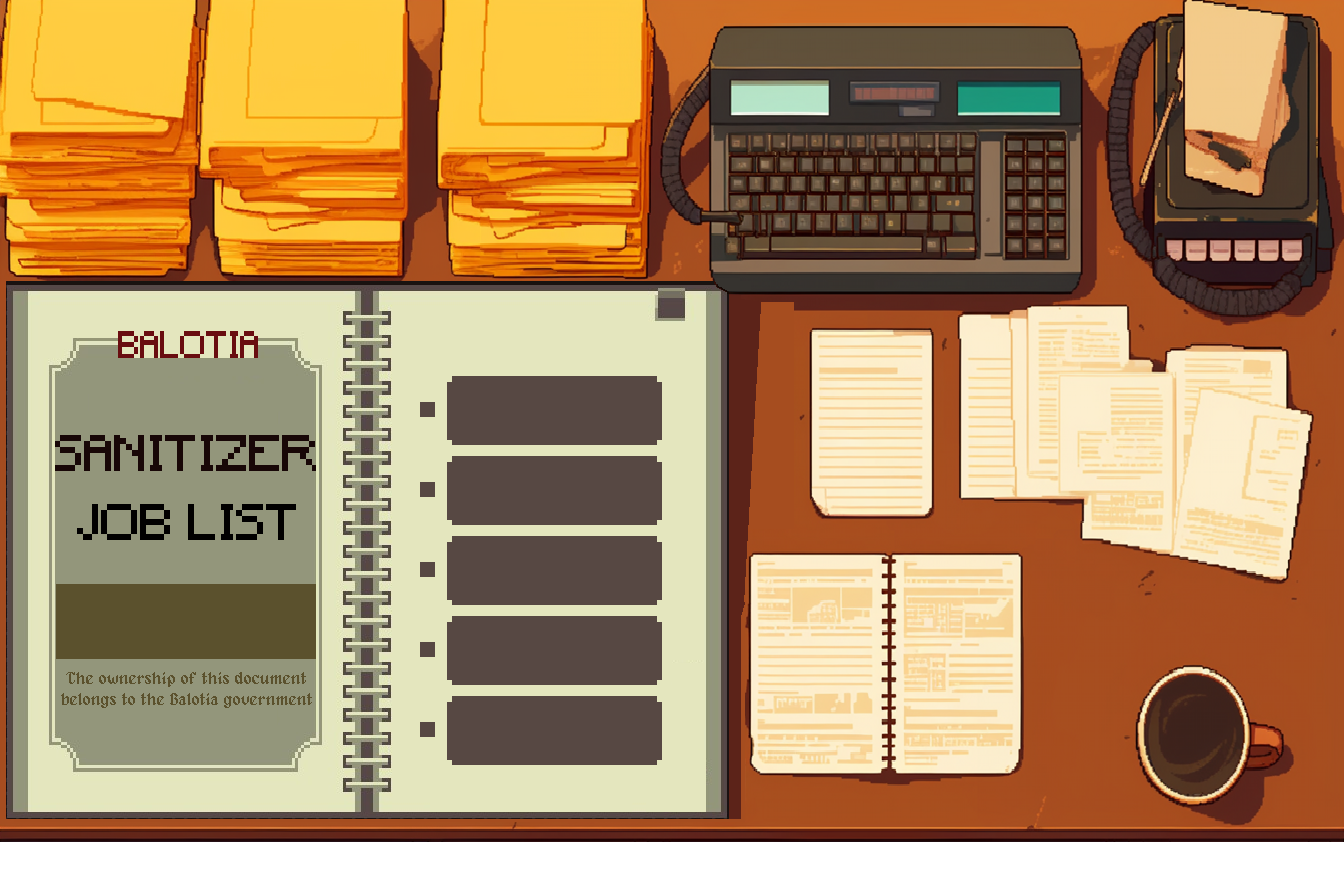
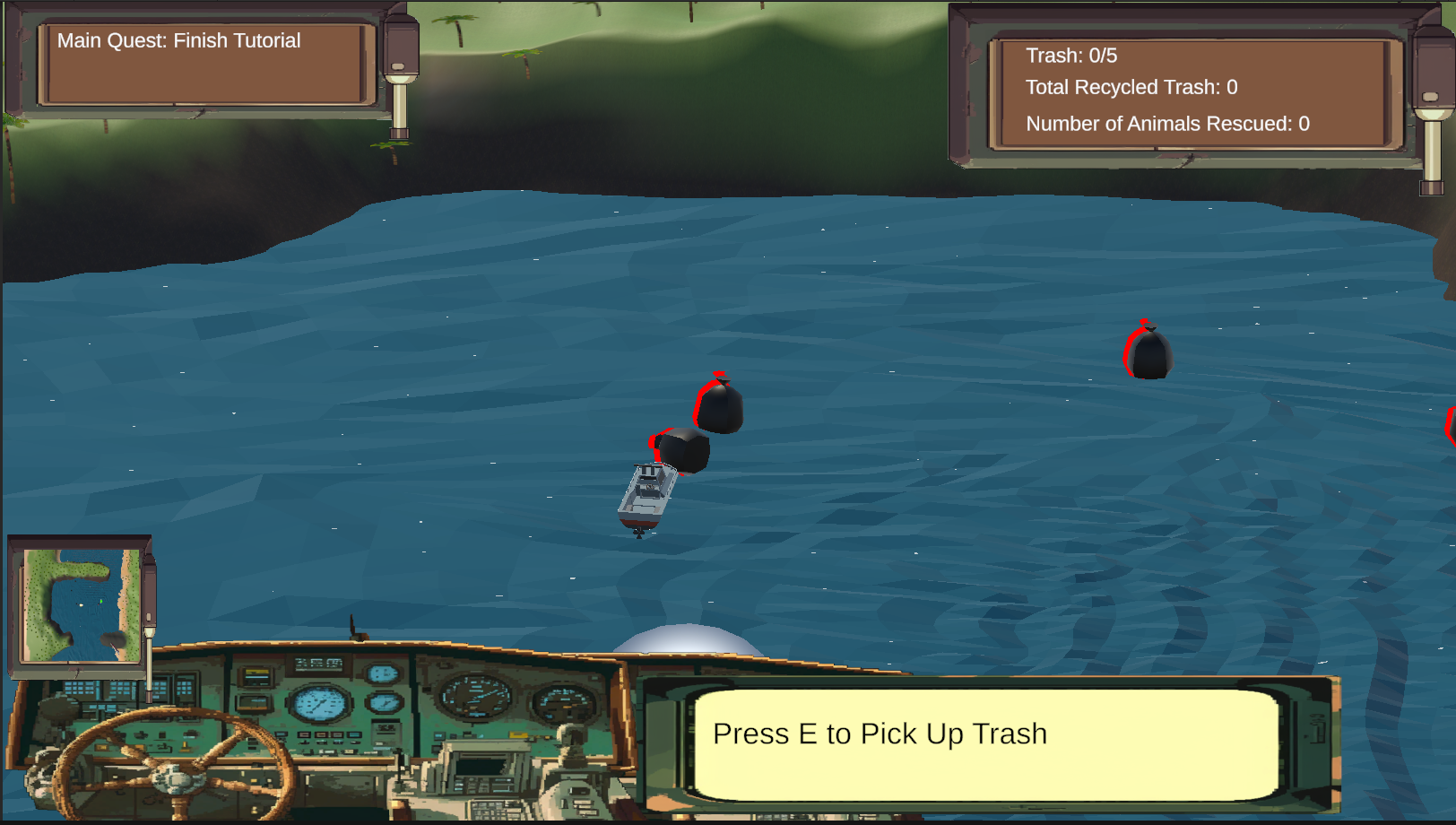
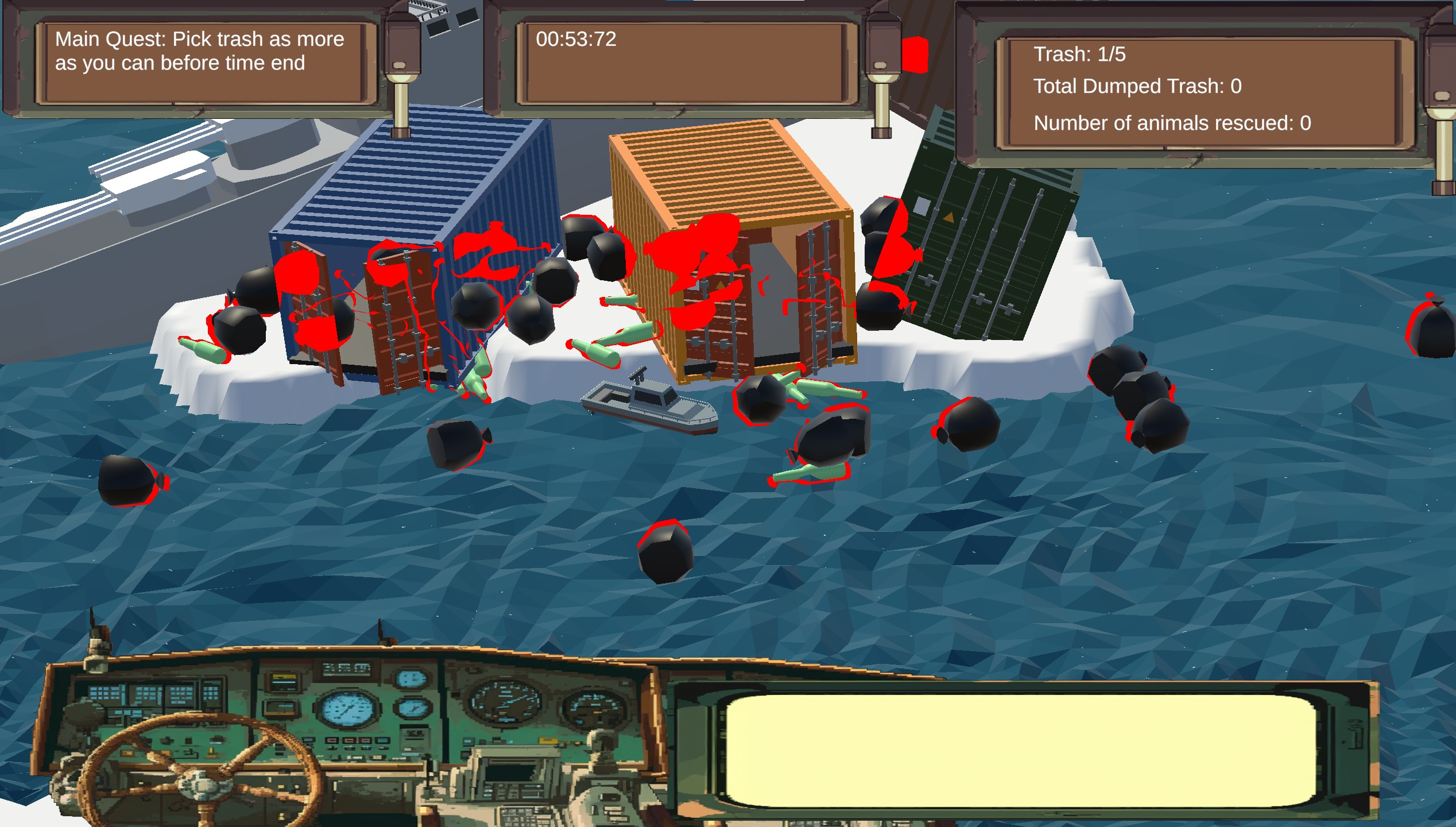
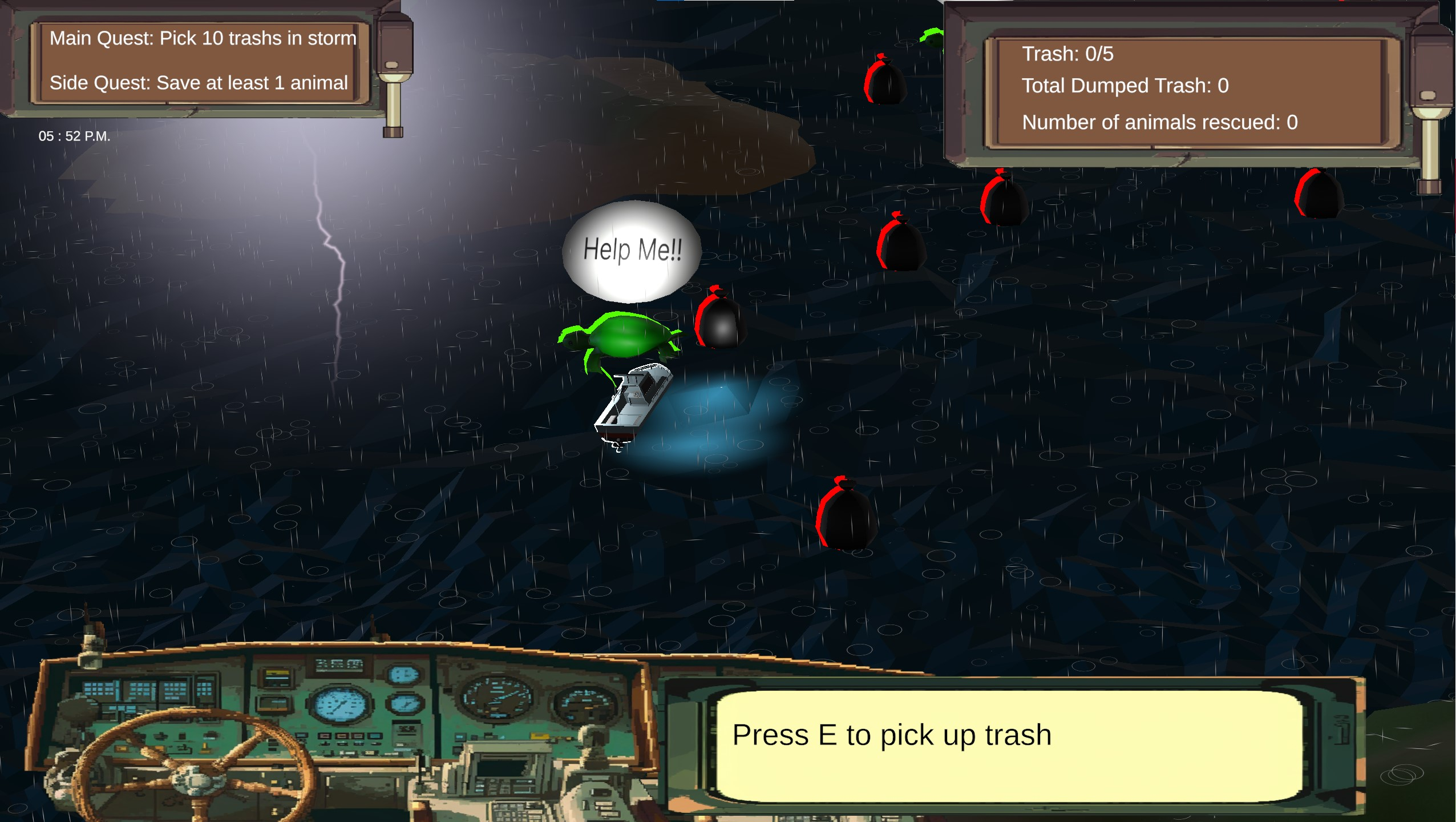
Dive into the world of "Sanitizer"! 🌊🚤 Embark on an eco-friendly adventure as you navigate your boat through polluted oceans, collecting trash, saving trapped animals and restoring beauty to the seas. With stunning visuals and engaging gameplay, "Sanitizer" challenges you to make a difference, one piece of garbage at a time. Join us on this mission to save our oceans and experience the thrill of cleaning up the environment in a fun, immersive way. Are you ready to be the change? Play "Sanitizer" now and help us create a cleaner, greener future! 🌍💧✨
Process:
Development Journey of "Sanitizer"
Our team, comprised of three programmers, two artist, one animator, embarked on an ambitious journey to create "Sanitizer," a game where players drive a boat and pick up trash in the ocean. From our initial brainstorming sessions to the final product, our development journey was filled with both excitement and challenges. Here's a look at how our game evolved, the surprises we encountered, the pitfalls we navigated, and the hardest decisions we had to make along the way.
Initial Concept
The original concept of "Sanitizer" was expansive and ambitious. We envisioned a game that not only focused on cleaning the ocean but also integrated dynamic sea levels, an upgrade system, and interactive NPC dialogues. The dynamic sea level was a particularly compelling feature, meant to show players the direct relationship between environmental pollution and climate change.
Major Changes and Surprises
As development progressed, we quickly realized that our vision was too grand for our small team. The dynamic sea level, which was supposed to visually represent the impact of pollution, was the hardest feature to cut. Despite its potential to enhance the player's experience, we lacked the necessary manpower and expertise to implement it effectively.
Similarly, the upgrade system and NPC dialogues were also scrapped. These features required more resources and time than we had available. Cutting these elements was a tough decision, but it allowed us to focus on polishing the core gameplay mechanics and ensuring a smooth player experience.
One of the biggest surprises was how much we underestimated the complexity of integrating seemingly simple features. For instance, the boat's movement and collision with trash objects required more fine-tuning than we anticipated. Additionally, balancing the game's difficulty and ensuring that it remained engaging without the cut features posed a significant challenge.
Pitfalls and Challenges
Throughout development, we faced several pitfalls. One major challenge was scope creep. Our initial enthusiasm led us to constantly add new ideas and features, which eventually became overwhelming. We had to learn the hard way to prioritize and focus on the core mechanics that made our game unique.
Another challenge was managing our time and resources effectively. With a small team, each member had to wear multiple hats. Programmers were also debugging and optimizing, while artists were tasked with creating assets and handling UI design. This juggling act often led to burnout and delays, not to mention we having to deal with time differences.
Hardest Cuts
The hardest cut was undoubtedly the dynamic sea level feature. It was a unique selling point that we believed would set our game apart. Removing it felt like losing a crucial part of our vision. However, we understood that implementing it halfheartedly would do more harm than good.
The upgrade system and NPC dialogues were also painful to remove. They would have added depth and replayability to the game, but their complexity was beyond our current capabilities.
Final Product
In the end, our final product, "Sanitizer," is a simpler, more focused game. Players drive a boat and pick up trash in the ocean, save trapped animals, with a strong emphasis on smooth mechanics and an engaging visual style. Despite the cuts and challenges, we are proud of what we achieved with our small team.
Team Involvement
Our core team consisted of six members: three programmers and three artists. We also had occasional input from external testers and mentors who provided valuable feedback. While we couldn't realize all our initial ideas, the collaborative effort and shared passion for the project helped us create a game that raises awareness about ocean pollution in a fun and engaging way.