
Image
Image
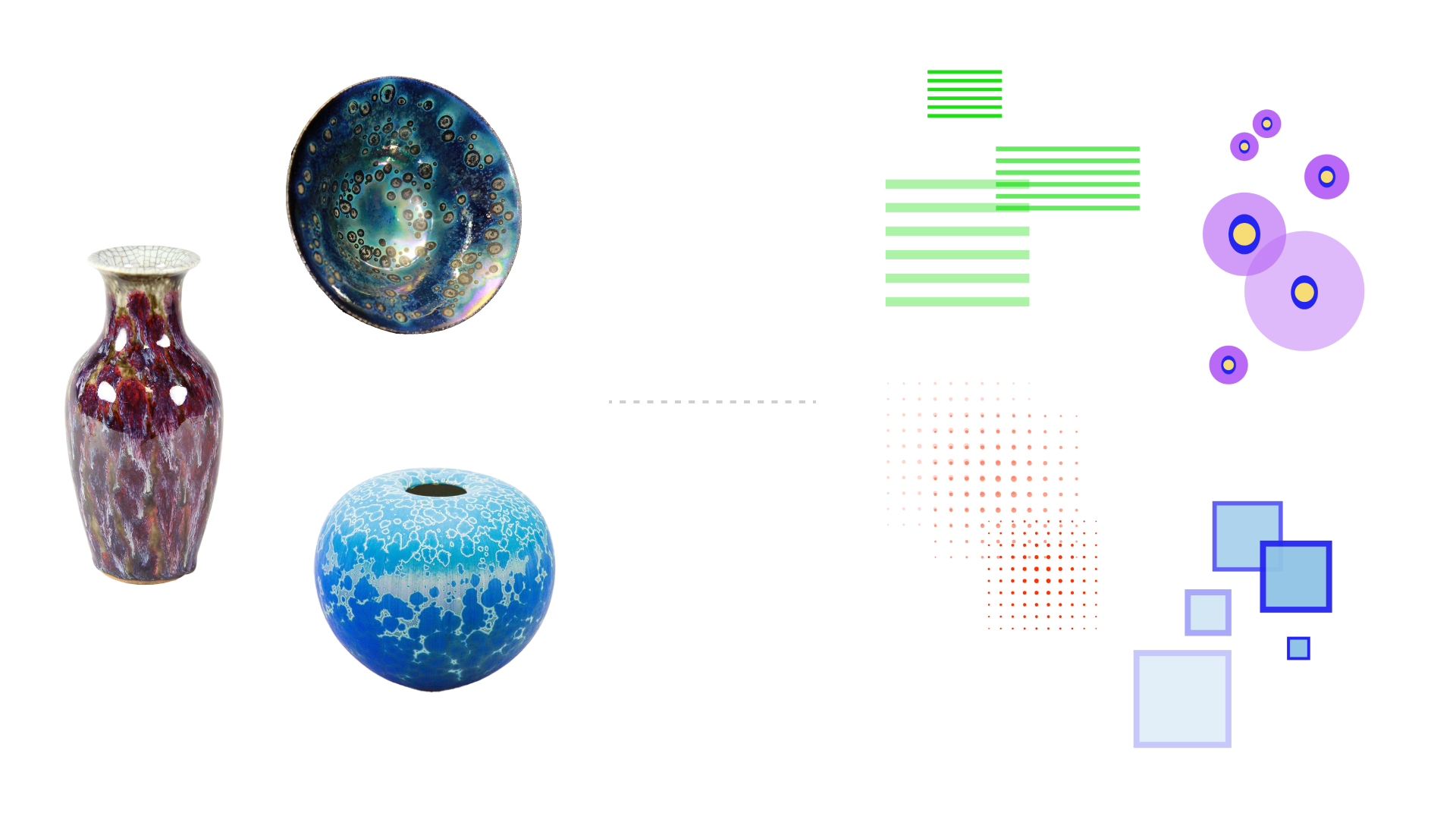
Inspiration: The exhibition is inspired by kiln transmutation, which is a process of glaze create unpredictable patterns on ceramics in chemical reactions when firing. In the design, these patterns are abstracted into four distinct visual forms.
Video file
Video file
Coding: A custom generative software was developed to simulate the process of digital glazing. Users can type any letter and adjust the levels of different chemical compounds displayed on the side panel. When the fire button is pressed, the software generates a unique glaze pattern.
Image
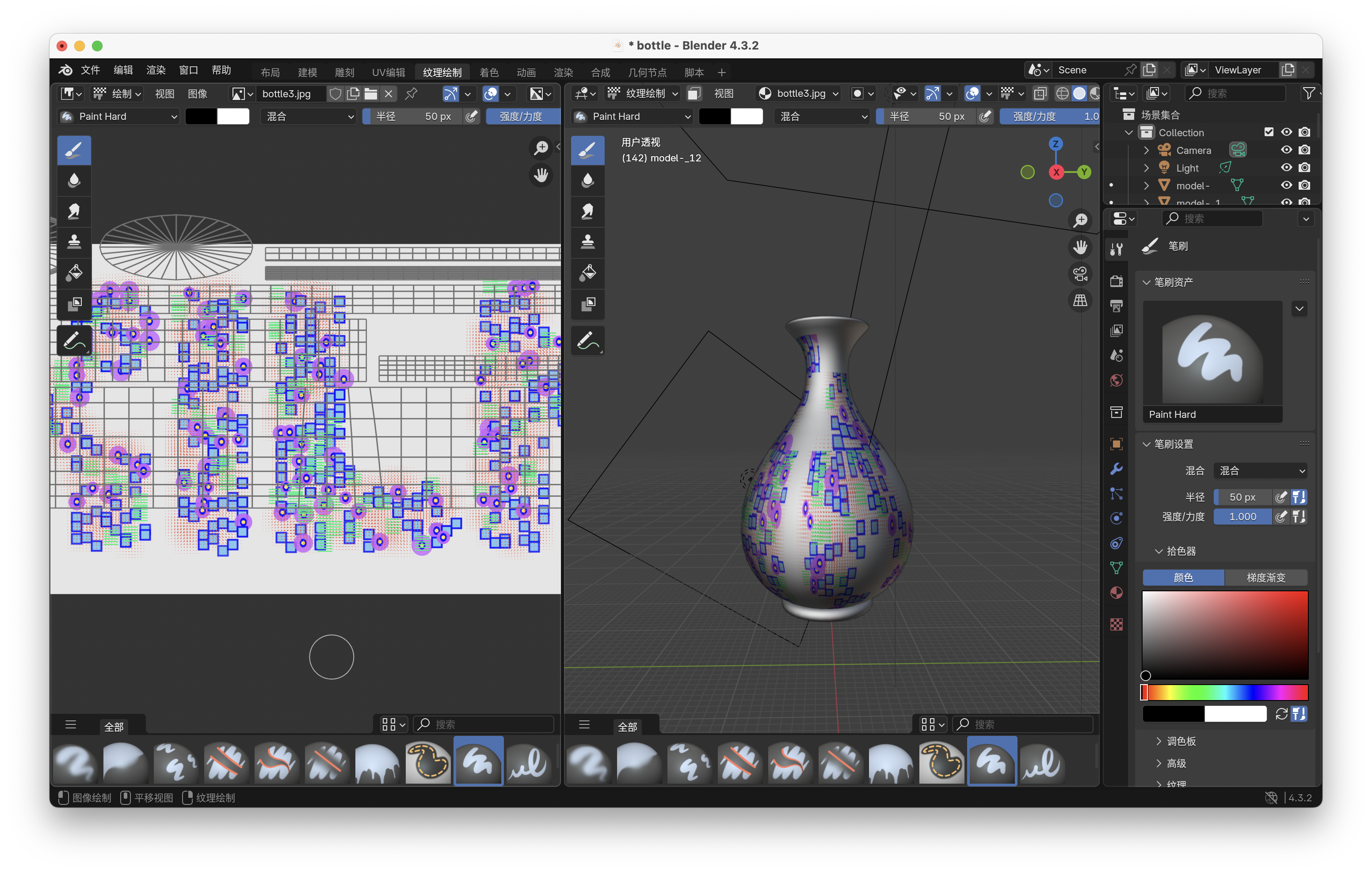
3D modeling: To extend the experiment further, 3D rendering was used to apply the generated glaze patterns onto ceramic models, exploring how digital visuals could merge with tangible form.
Installation: By projecting the real-time generative visuals onto physical ceramic pieces, visitors can control the glaze through the software while simultaneously experiencing the process on actual pots.
Image
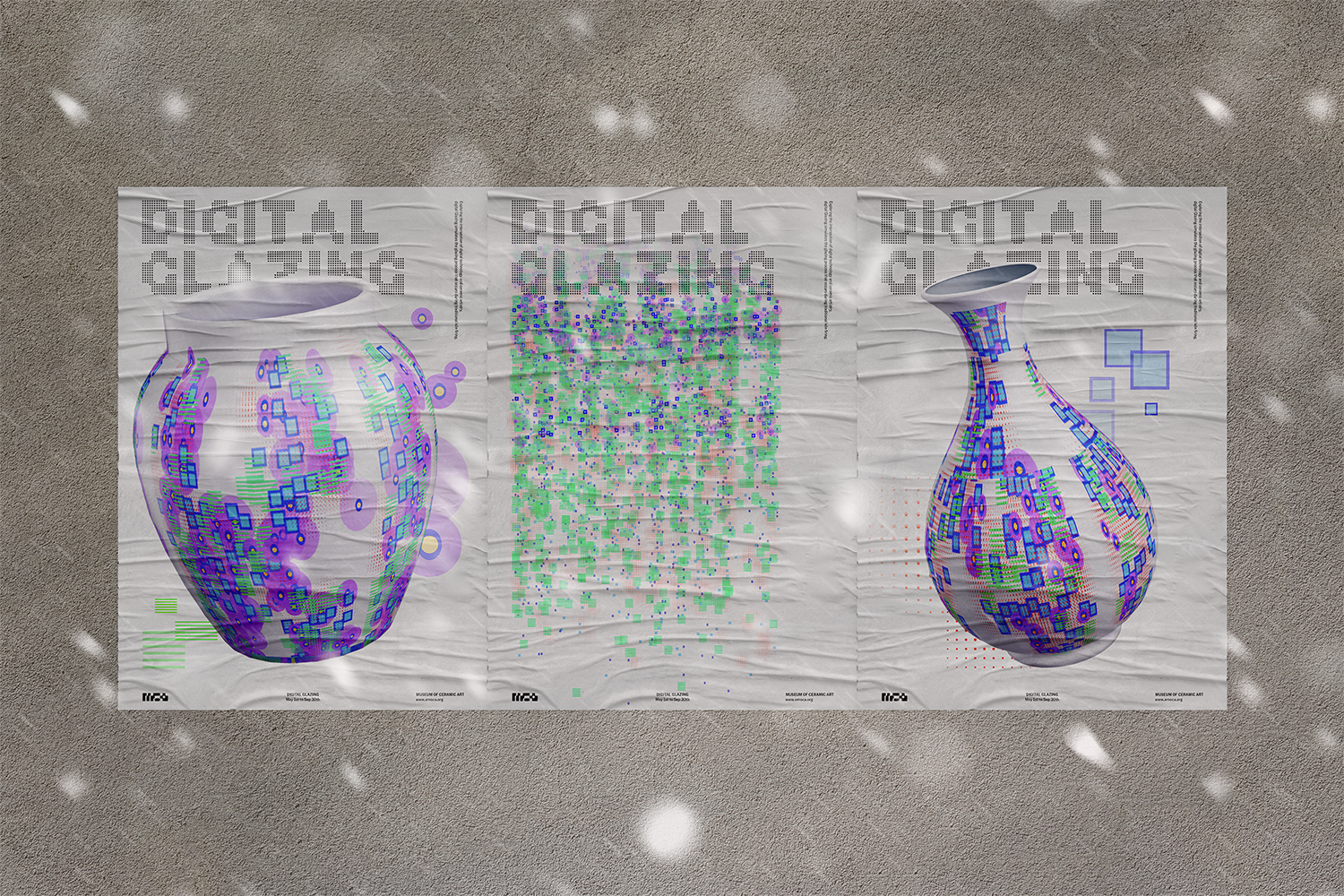
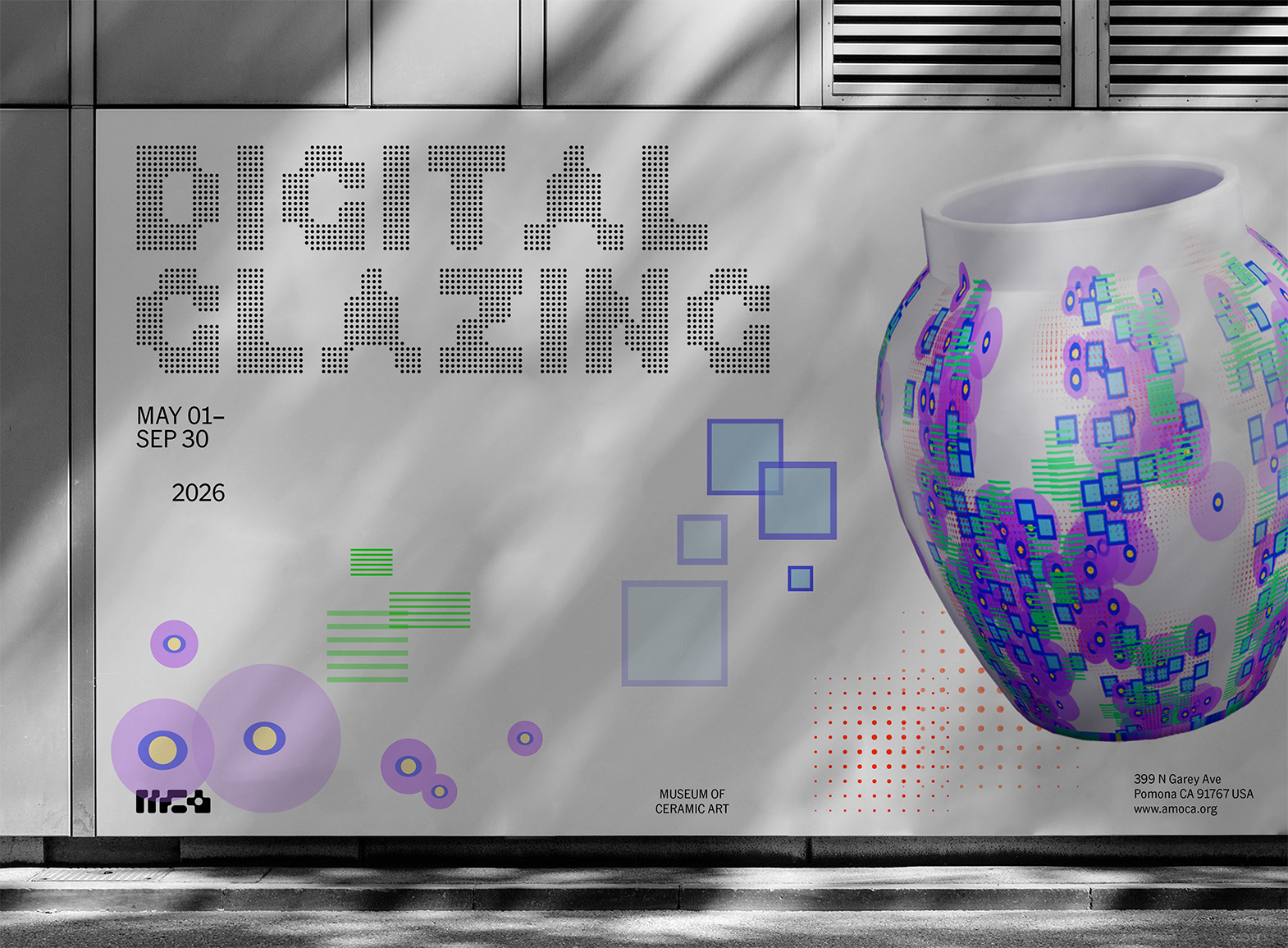
Posters: The digital ceramic forms and glaze patterns are incorporated into the poster series as key visual elements, serving as the core of the exhibition’s identity system.
Image
Image
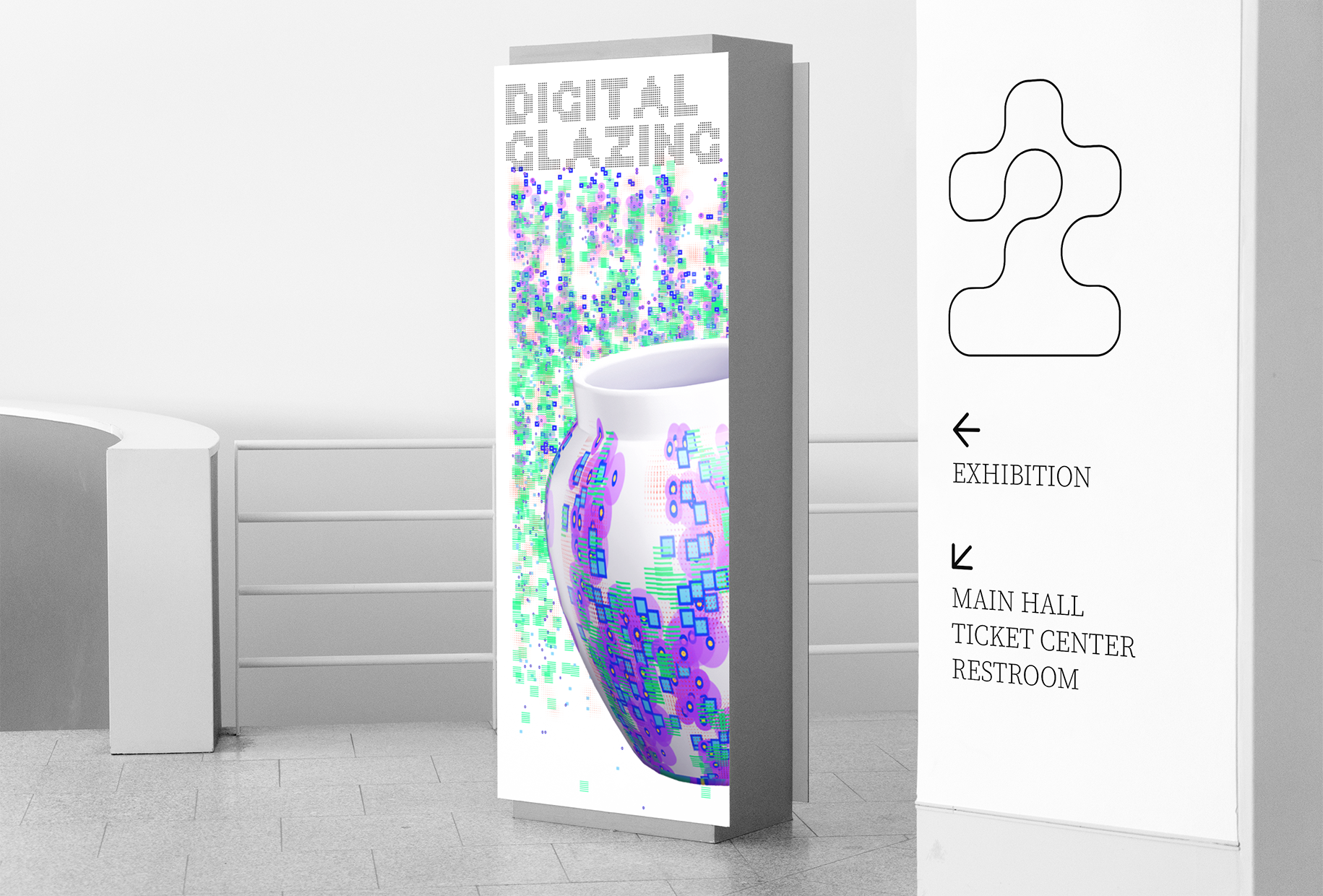
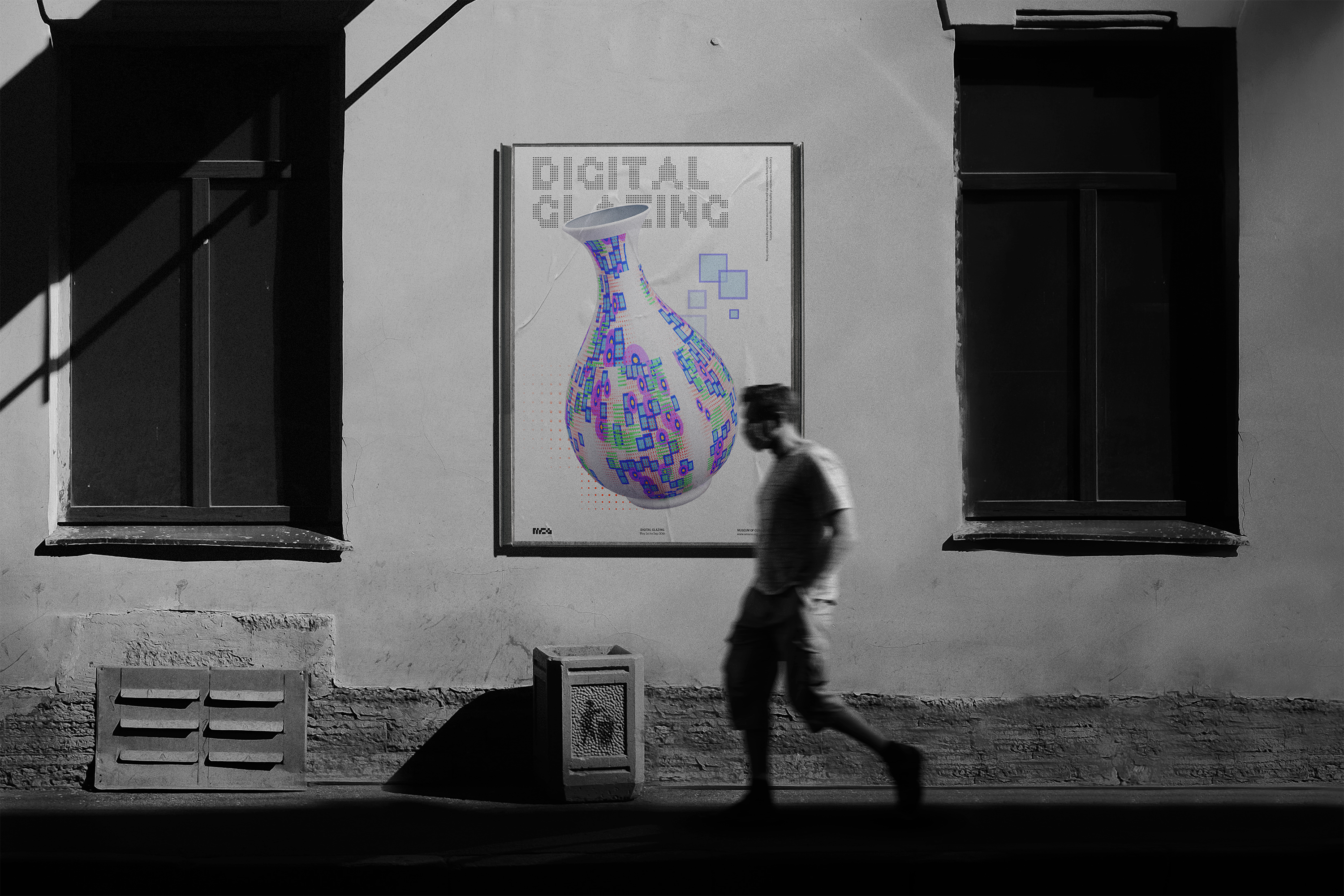
Spatial: The graphic elements are also adapted for spatial promotions, attracting passersby to stop and explore the exhibition.
Image
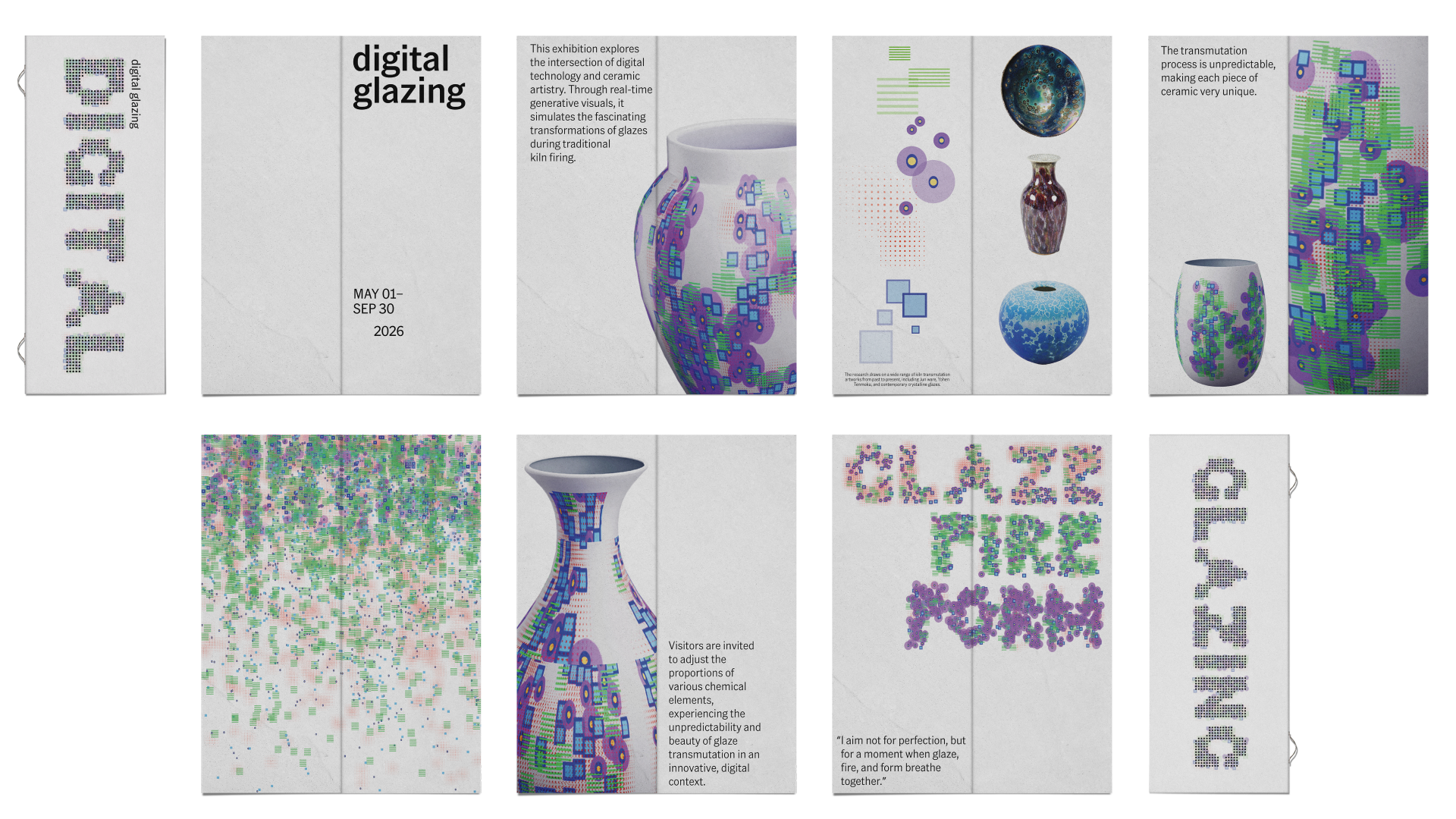
Brochure: The exhibition brochure highlights details such as inspirations, design elements, and concepts. The cover is printed on vellum paper, symbolizing the transition from one state to another.