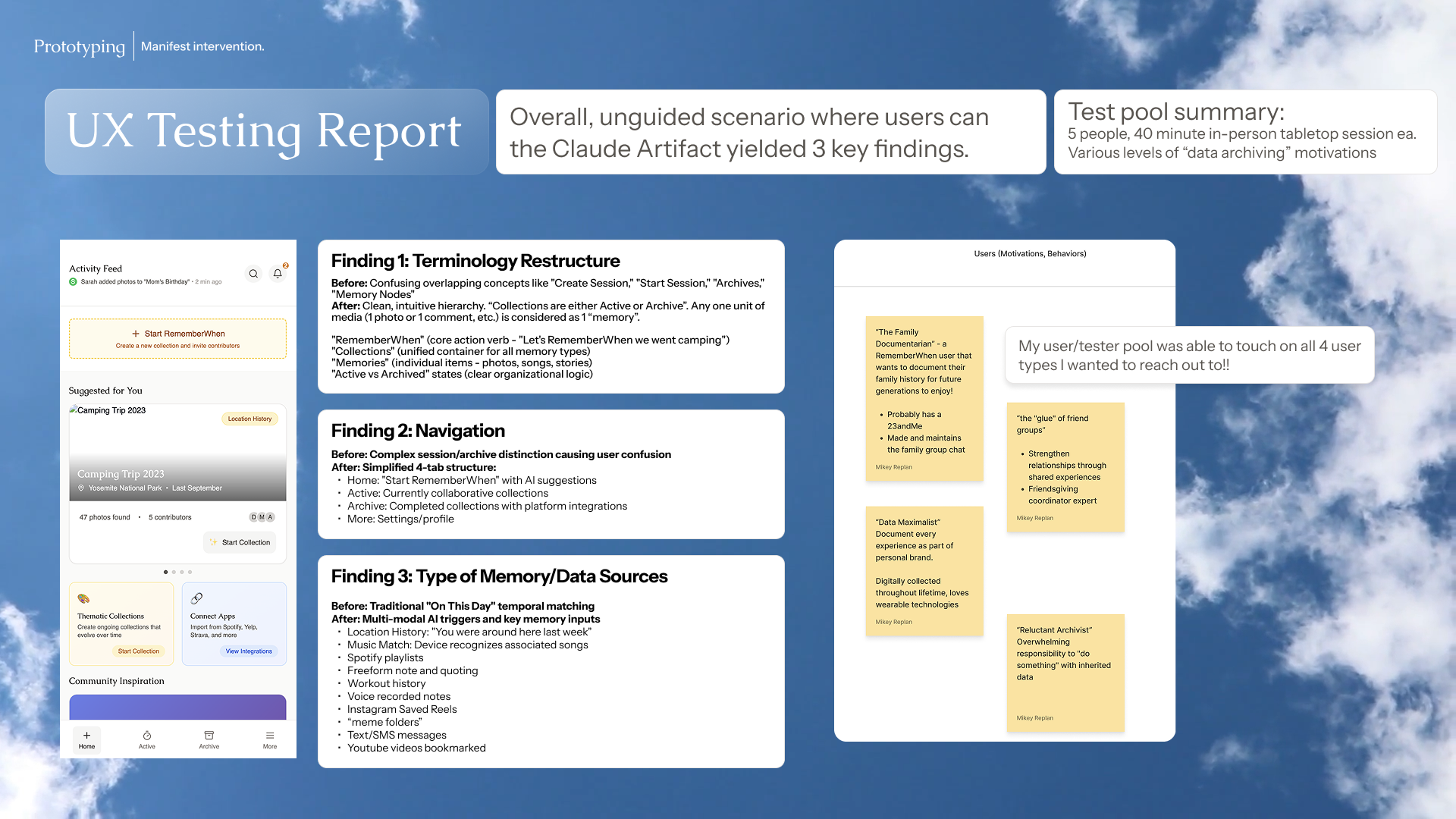
By deeply listening to each user's experience and thoughts on what types of memories they wanted to archive, I learned the many forms of digital and analog inputs they valued. It was more than just photos and videos, but also things like voice recordings, music playlists, boutique hotel check-ins, and video game achievements. Photo on the right, as seen on the video, depicted the multi-modal memories Mikayla built so far.
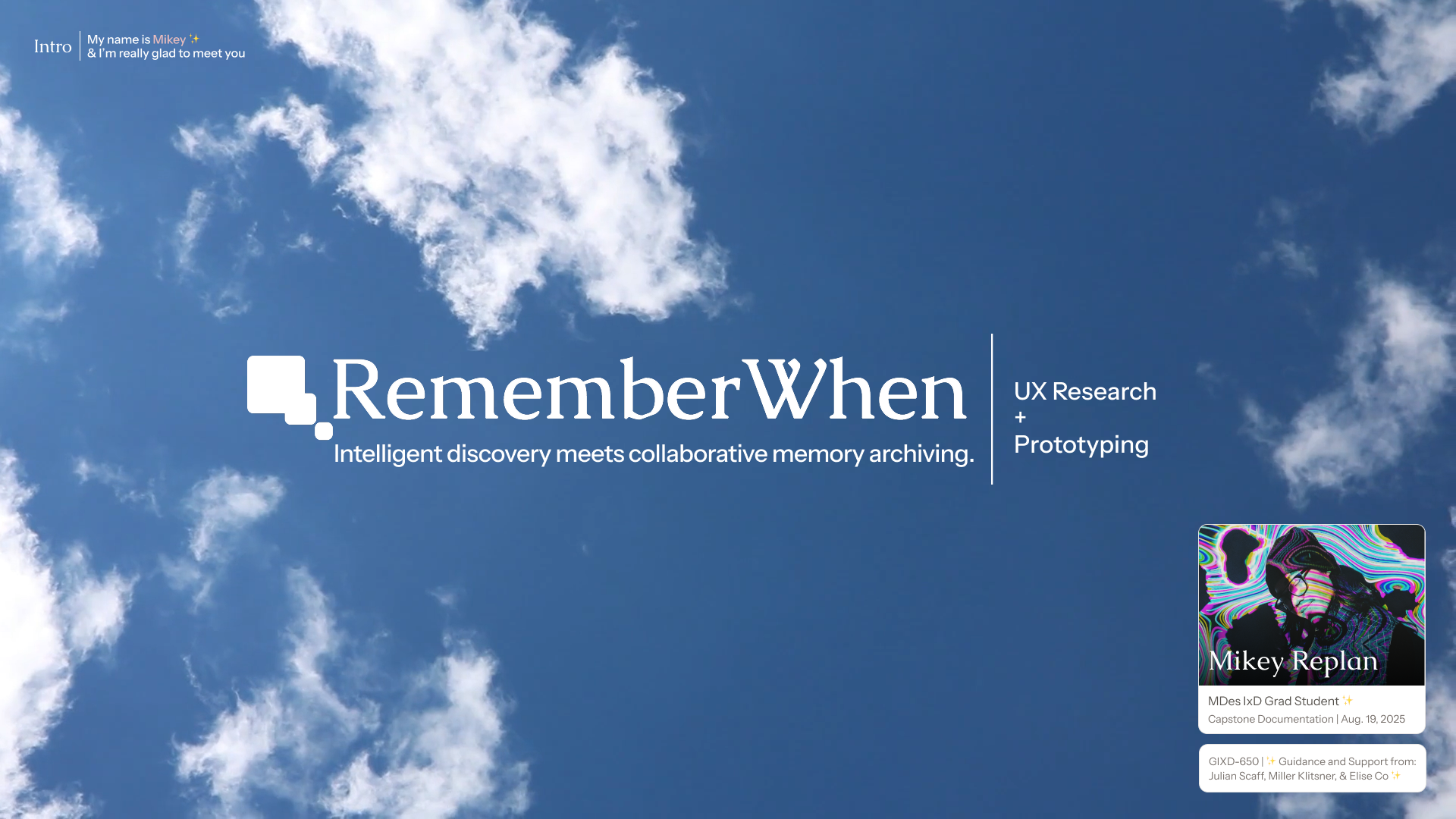
Mikey Replan
Master of Design in Interaction Design — Graduate Interaction DesignRememberWhen
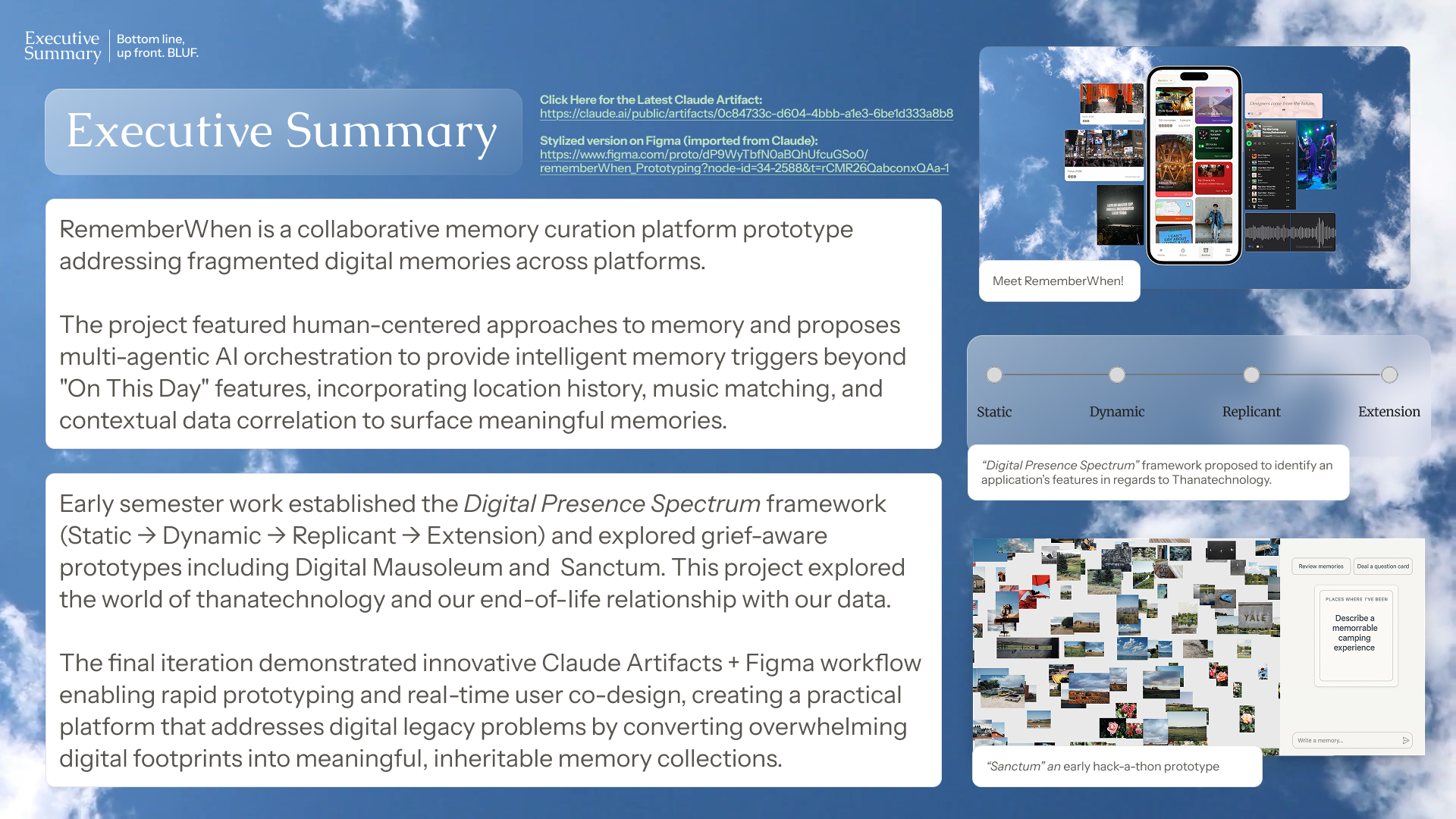
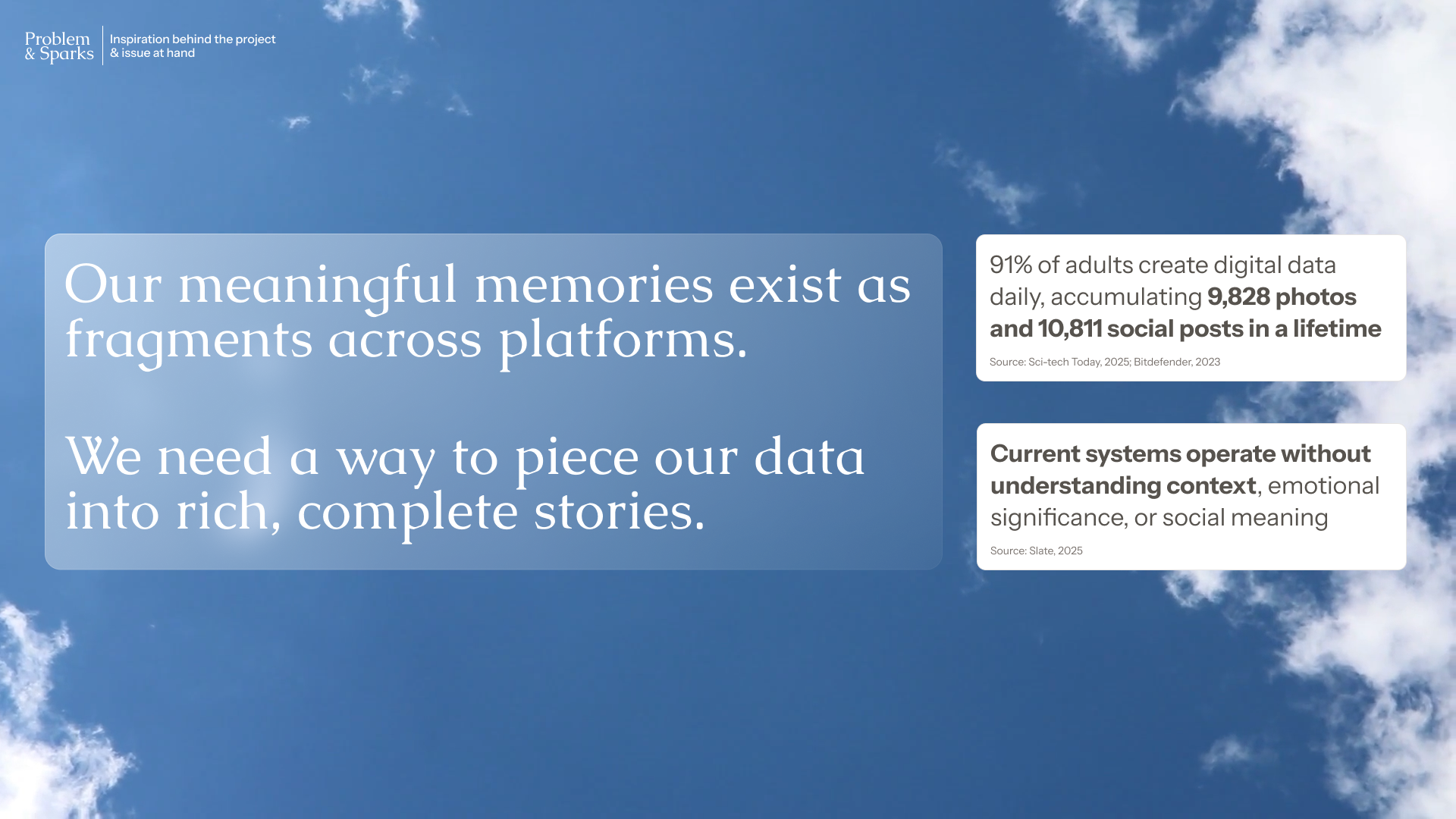
Grounded in research on digital legacy and thanatechnology, RememberWhen transforms unstructured photo libraries into curated legacies: not overwhelming data, but intentionally authored, co-created, multi-modal memory archives.
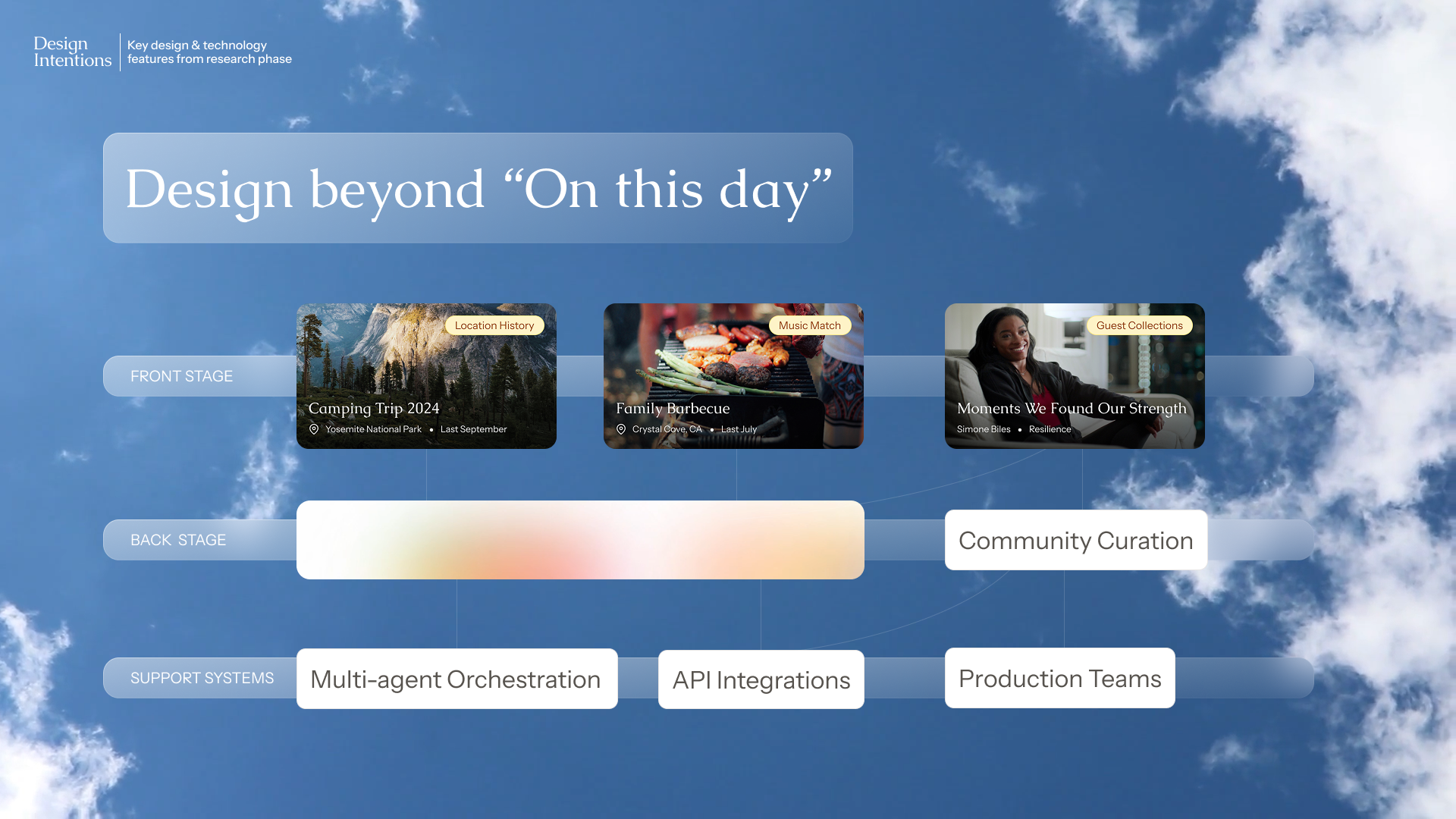
RememberWhen reimagines memory curation through two complementary approaches: AI-powered discovery that surfaces memories through location proximity, music associations, and temporal patterns; and collaborative archiving that lets friends and family enrich shared moments with annotations, playlists, and stories.
The result transforms scattered digital artifacts into rich, contextual collections—camping trips recalled when you're near the trailhead, wedding memories triggered by a song, family barbecues resurfaced through shared music. These collections can then become sense-maked artifacts of your life.
Check out the accompanying Medium article which proposes the relevant Digital Presence Spectrum: https://medium.com/p/a04c1bf098d3
Full, long-form Project Documentation: https://www.figma.com/slides/Je4VZlG5TOA6pMY3oKZrML/MReplan_CapstoneDocumentation_RememberWhen_MDesIxD?node-id=1-100&t=v0PmXQOYsjCVMzz4-1
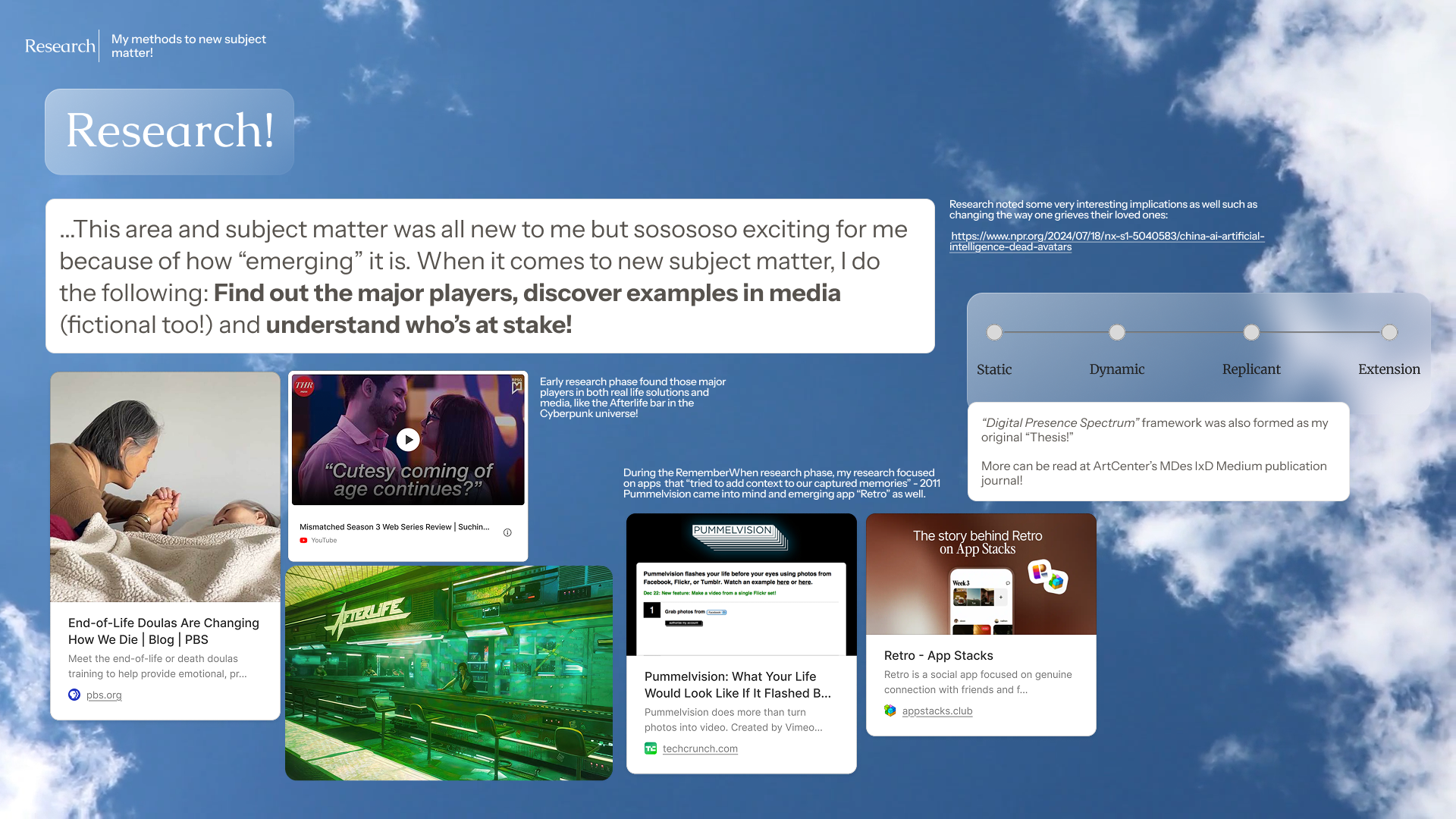
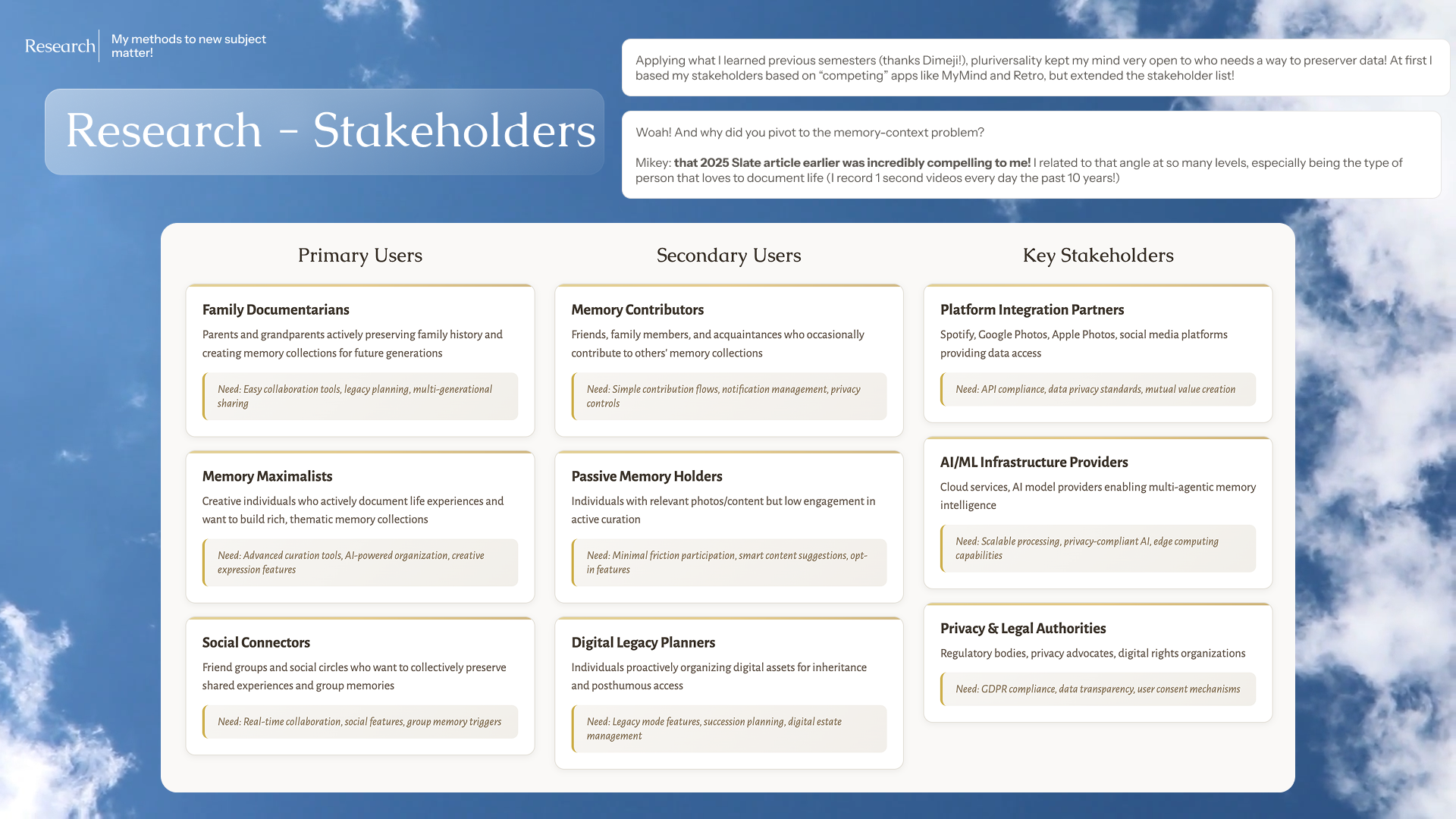
This project emerged from my personal practice (ten years of daily one-second video documentation) and research into digital legacy planning. The incredibly provoking research activity throughout the capstone semester explored the many ways humanity implemented ways to remember loved ones as well as speculative ones found in science fiction. Research not only revealed our ever-growing digital footprint but also potentially harmful technologies that manipulate the way we remember, such as how virtual replication of the deceased may defer closure and disrupt the psychological arc of grief.
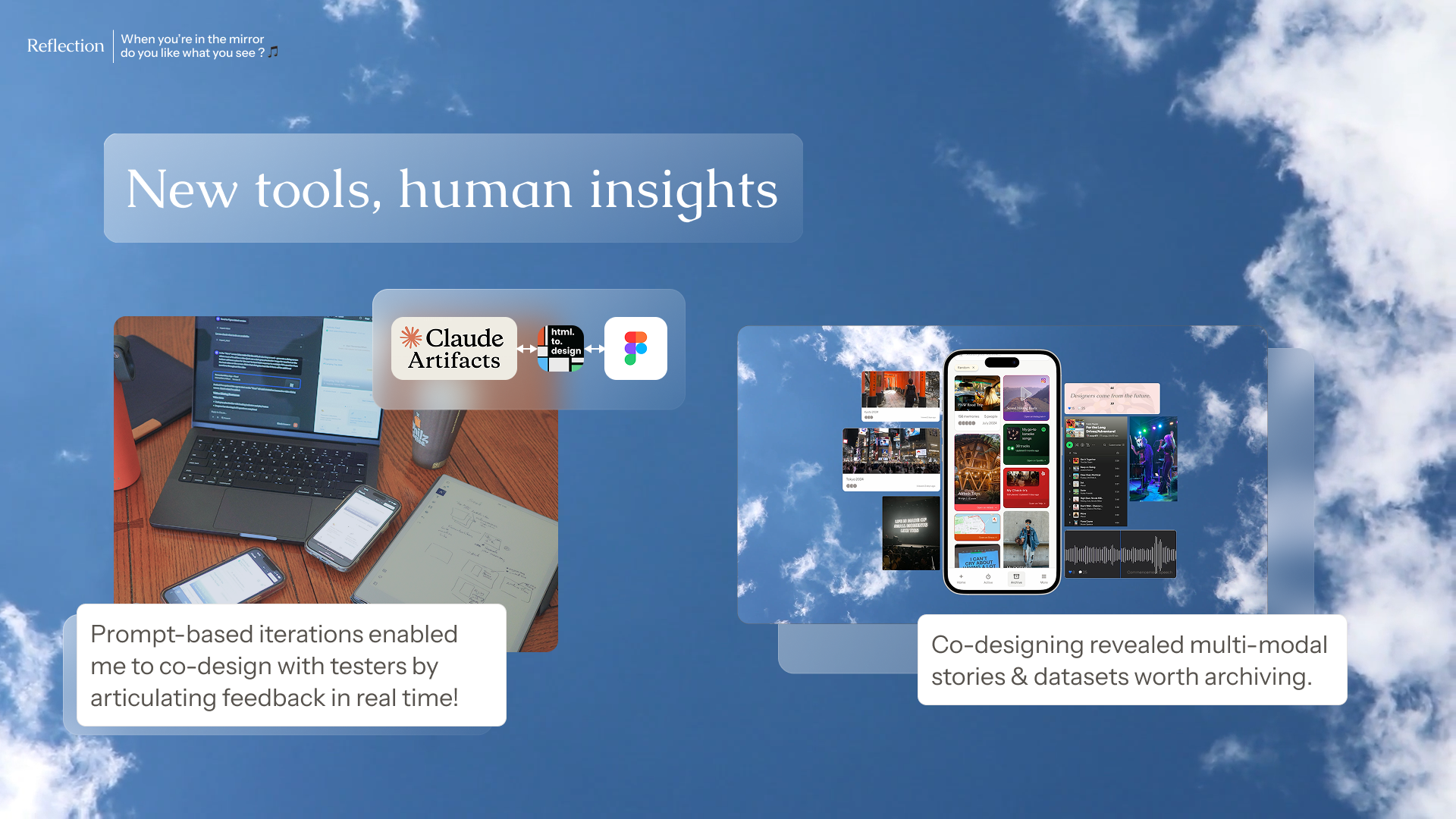
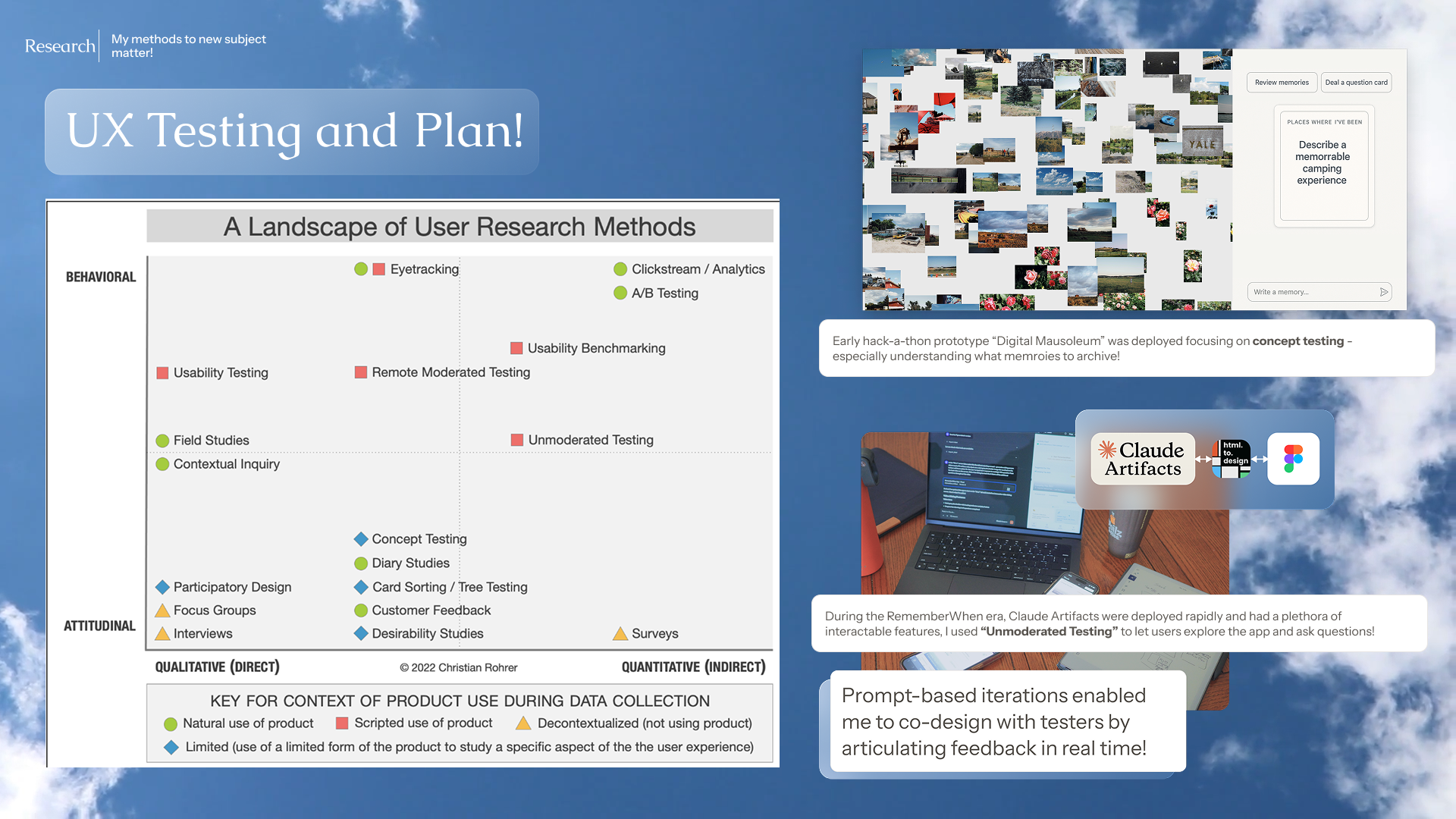
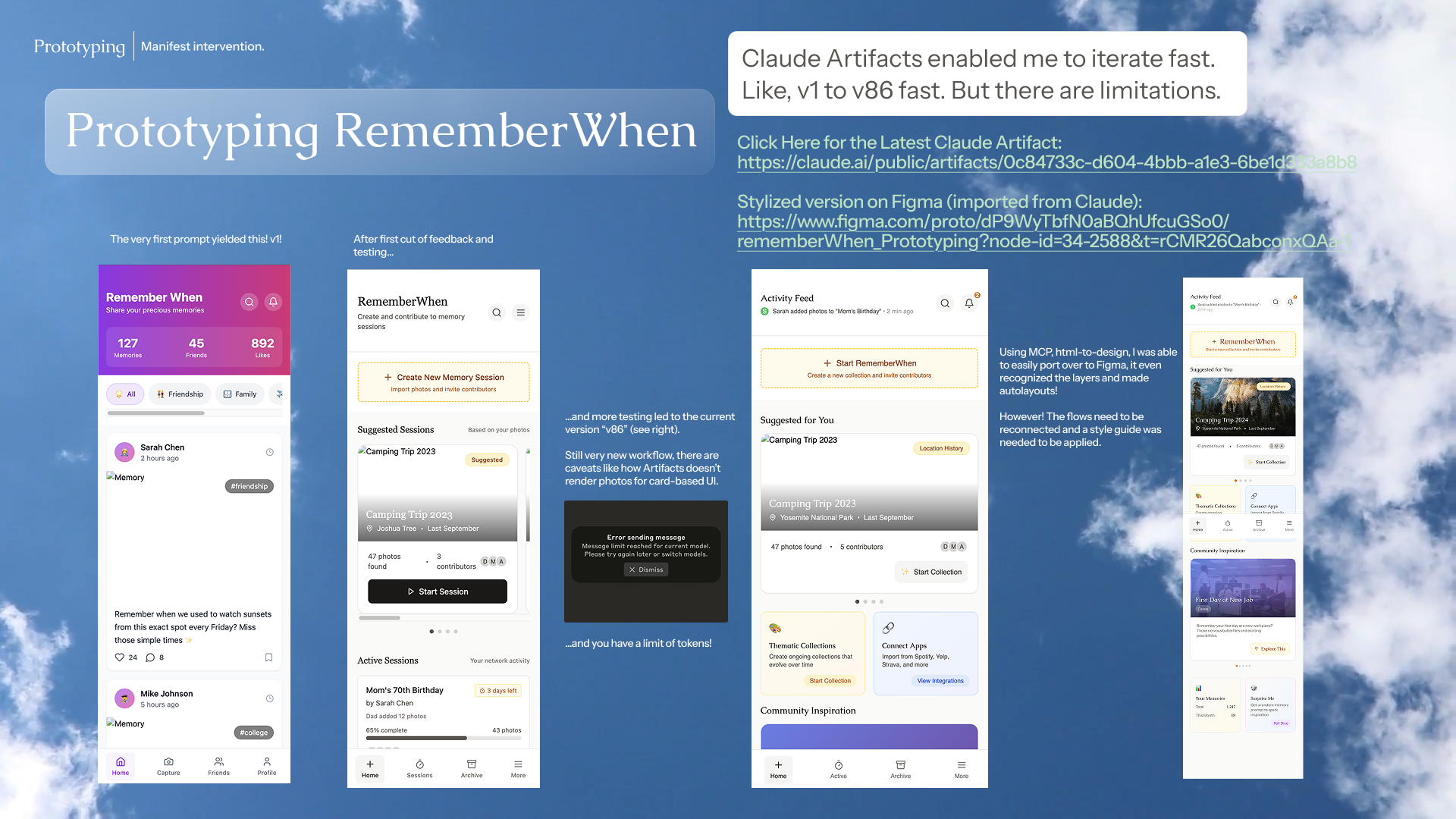
This capstone semester timeframe was during the exponential rise of vibe-coding prototypes. I took an ambitious risk and used the new-at-the-time Claude Artifacts to rapidly build functioning prototypes and deploy alongside users. The ease of iterating prototypes by vibing helped me rapidly triage and resolve user feedback.
Mikey's got RANGE: I love this project because it's not aerospace related at all yet still authentically me. This project was a personal reminder on how I can courageously lean on my curiosity to rapidly immerse in a new domain such as thanatechnology.
Emotion in Data Matters: coming from a cold, ultra-objective, data science background, this subject matter revealed to me how our data still holds emotions and how design can still have space to honor that. It's not just a memory storage capacity problem, but also how the data can make us feel based on how it's presented. RememberWhen's visual design went through multiple iterations to invoke a sense of calm, serenity and acceptance, even seen by the gentle sky background in the presentation deck.
Research is Humanizing: I had the honor of interviewing people that shared their efforts and experiences in the act of remembering. Further, the emerging death-tech and memory archiving landscape exposed to me how unstructured and sensitive this domain still is. As AI accelerates in parallel, memory preservation and the way we present it requires profound care and responsibility.
By deeply listening to each user's experience and thoughts on what types of memories they wanted to archive, I learned the many forms of digital and analog inputs they valued. It was more than just photos and videos, but also things like voice recordings, music playlists, boutique hotel check-ins, and video game achievements. Photo on the right, as seen on the video, depicted the multi-modal memories Mikayla built so far.