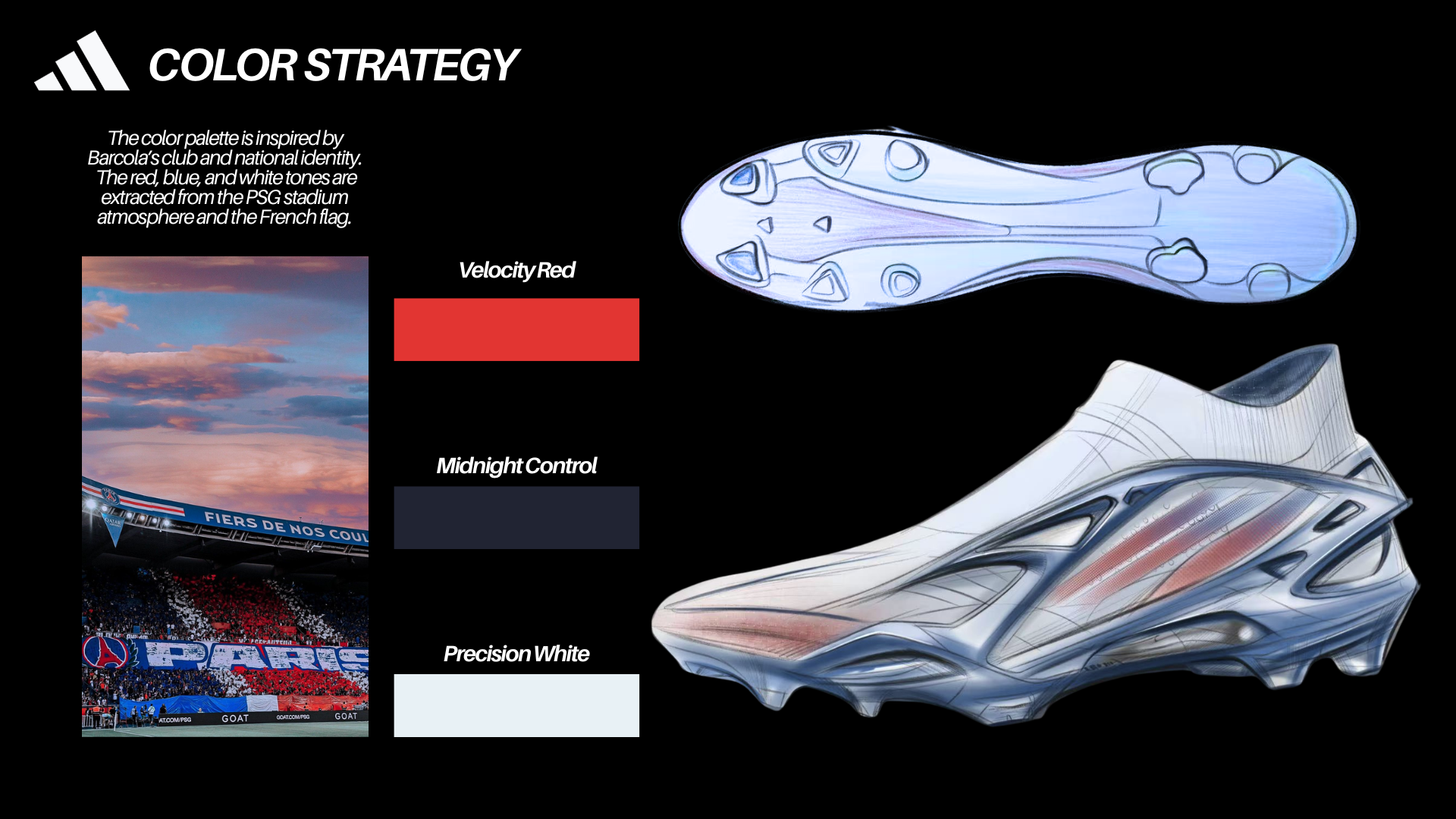
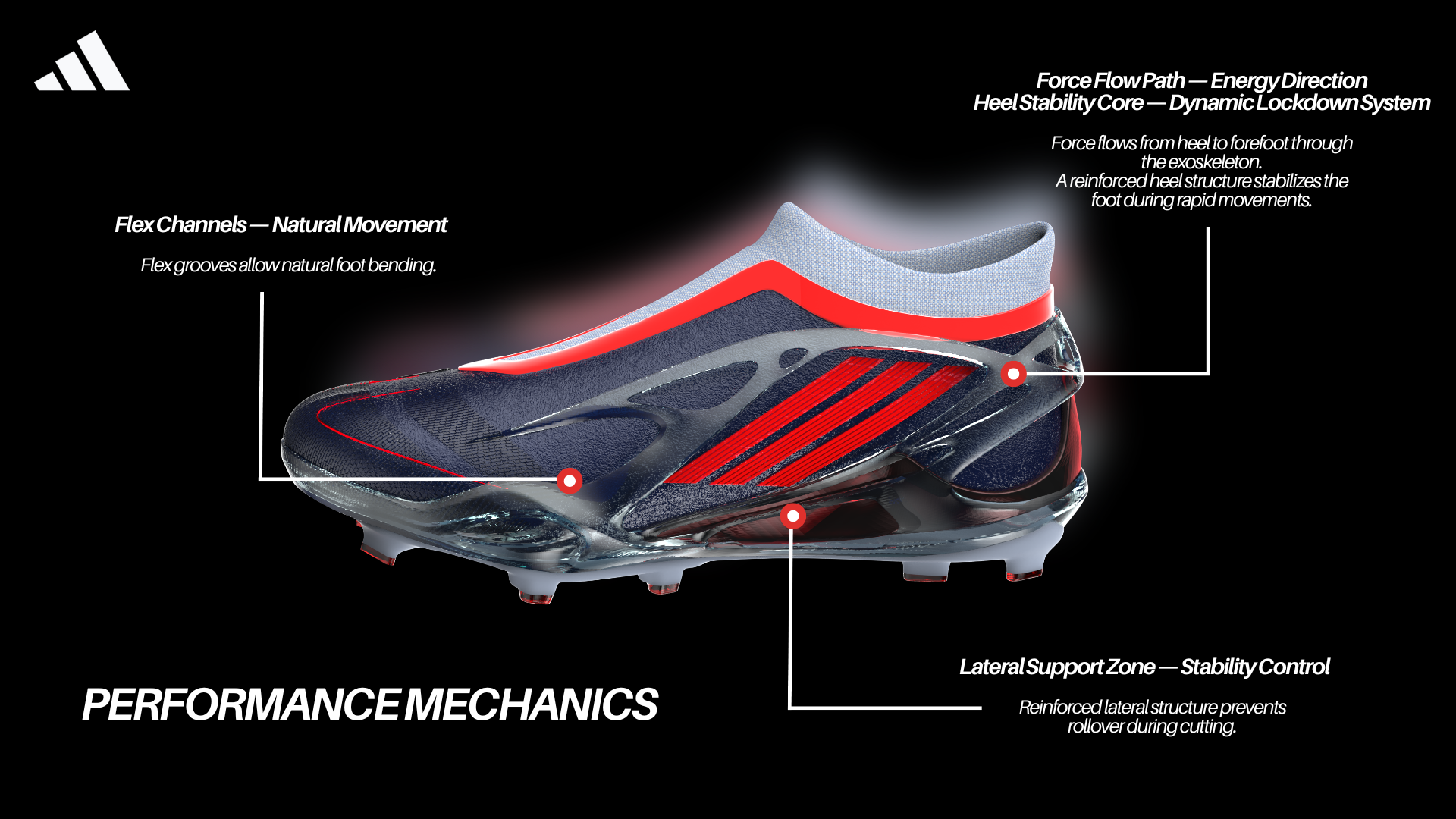
This project explores how to redefine the adidas F50 football boots as a high-performance speed system. The goal is to enhance acceleration, cutting, and directional control for next-generation attacking players.
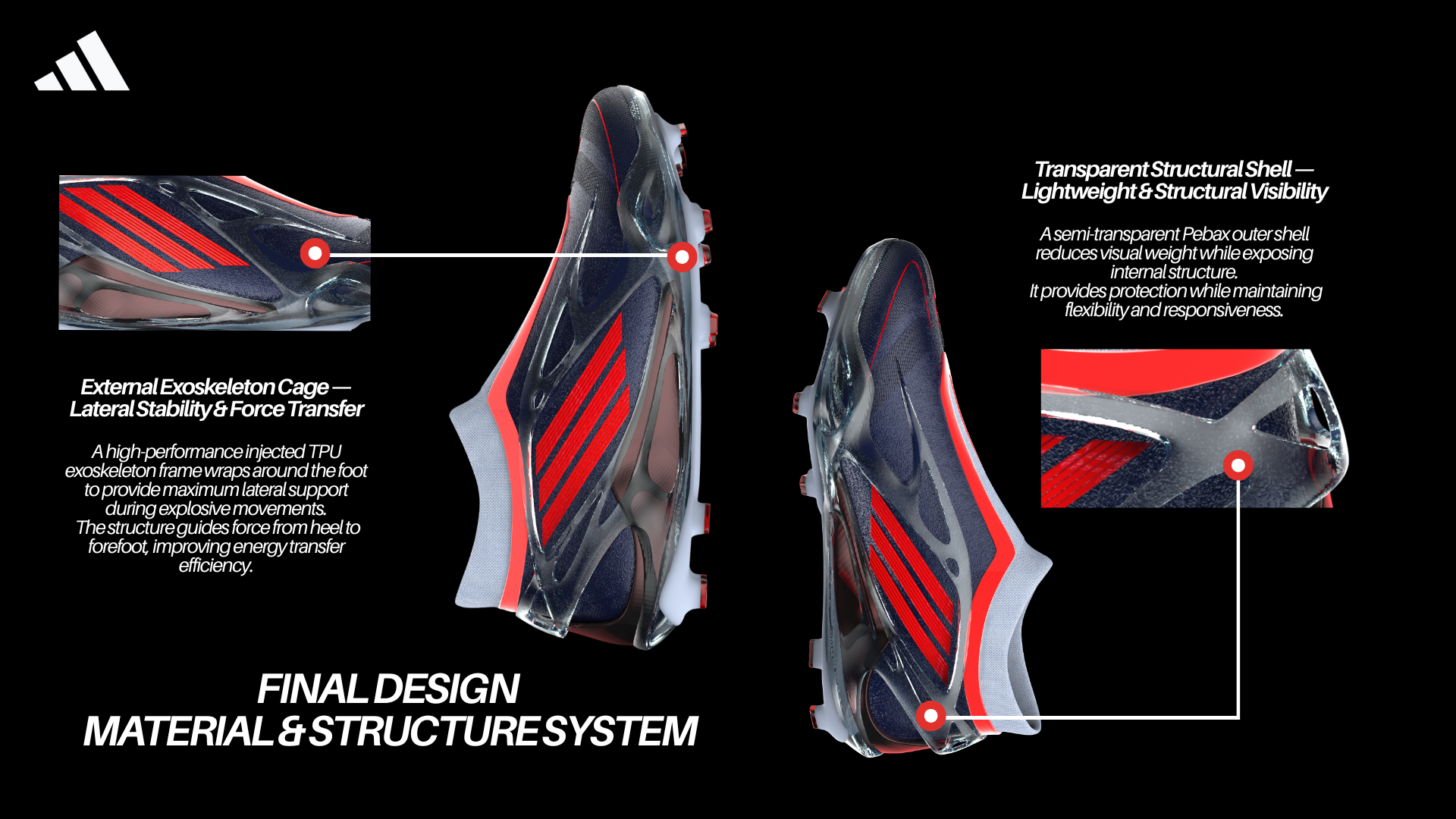
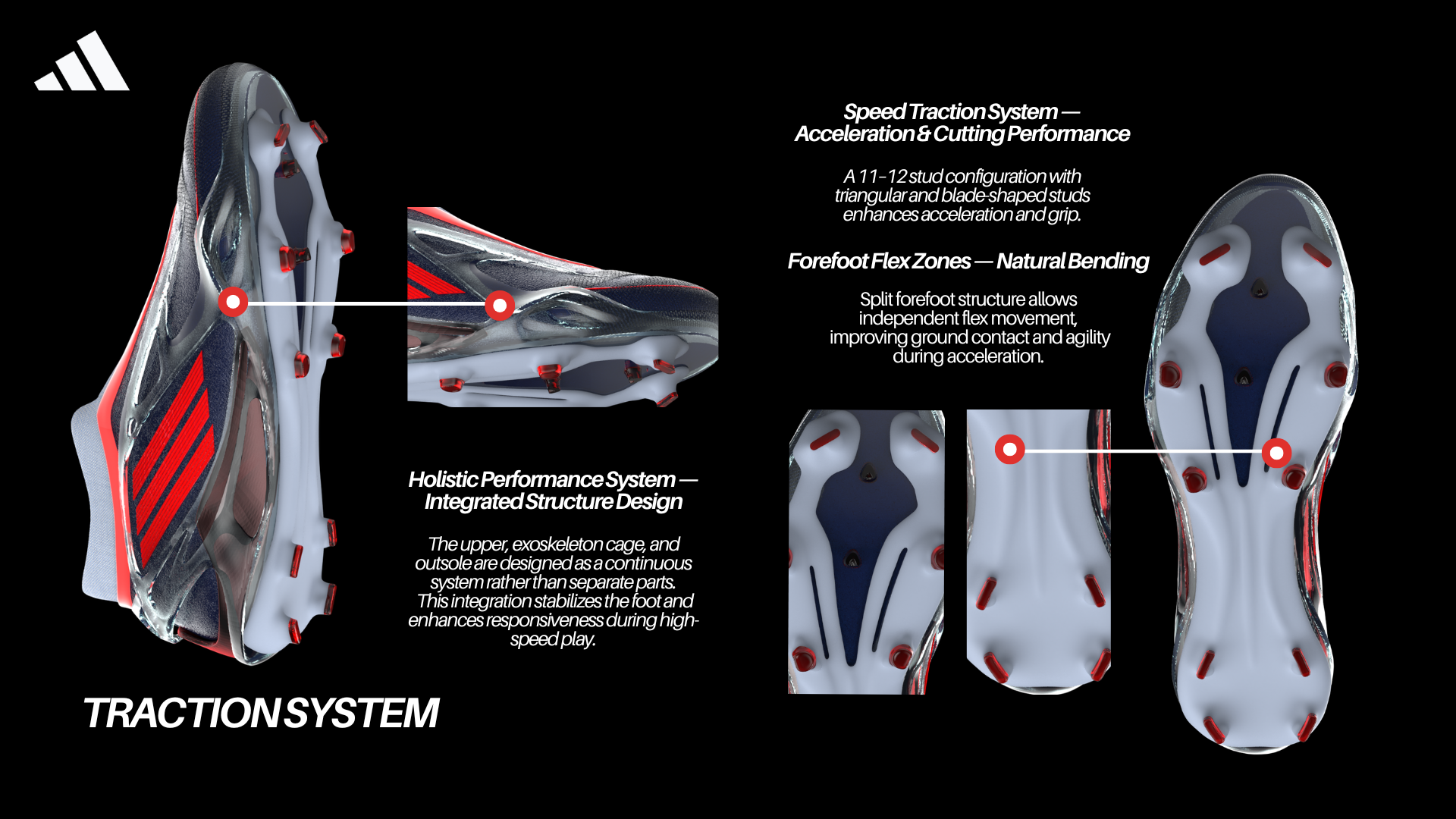
Instead of a traditional upper that only wraps the foot, this design introduces an external exoskeleton structure. The system separates fit and performance, allowing precise control of compression, torsion, and energy return.
Inspired by athlete movement and game intensity, the design focuses on three key phases: cut, stop, and explode. The exoskeleton stabilizes the foot during impact, controls rotation during cutting, and releases stored energy for forward propulsion.
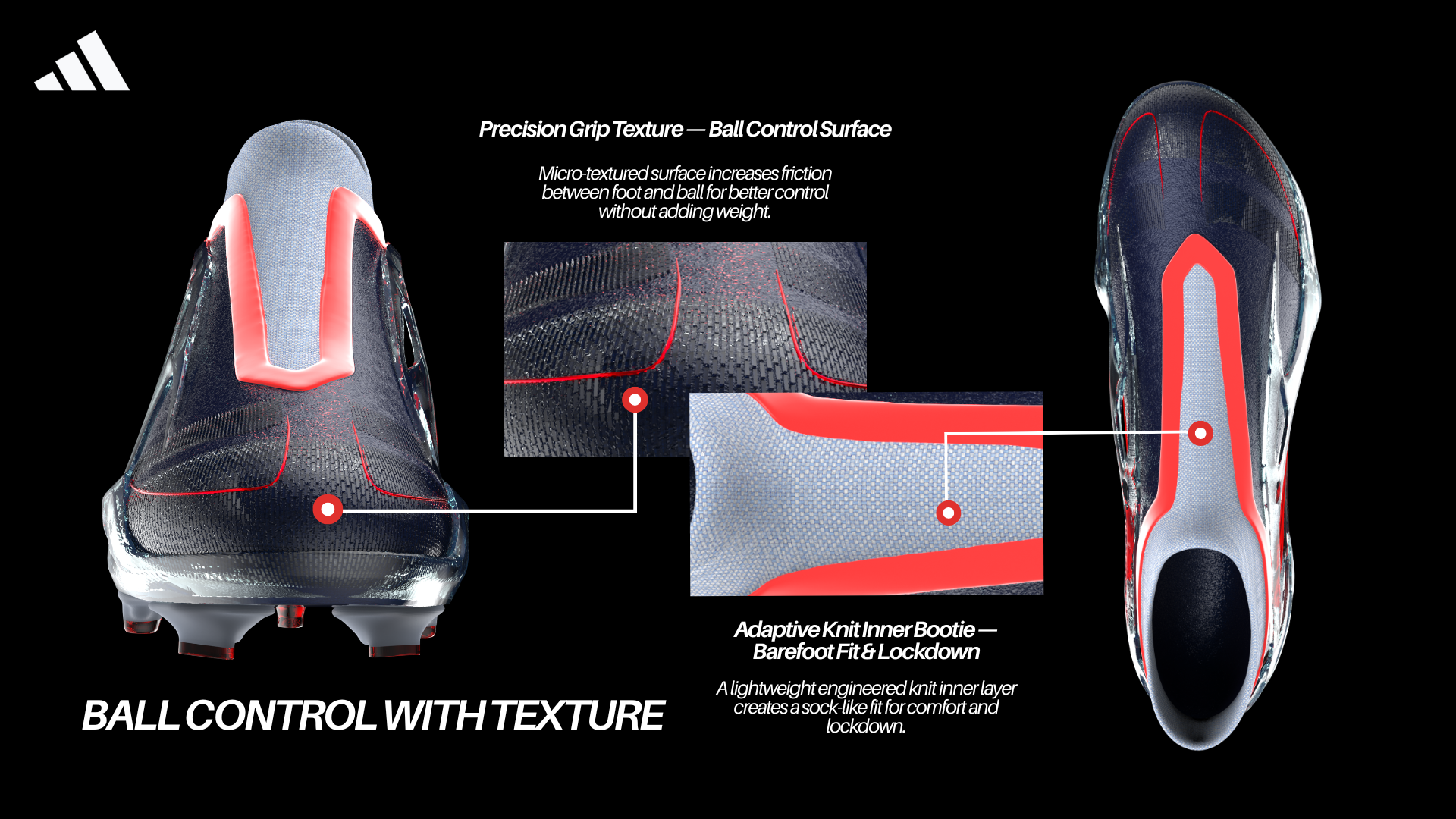
The outcome is a lightweight, responsive football boot that acts as an extension of the athlete, improving speed, control, and overall performance on the pitch.
Process:
This project started with research on speed-focused football players, analyzing movements like acceleration, cutting, and quick direction changes. I studied existing adidas F50 football boots to understand current design limitations. Based on this, I explored exoskeleton concepts through sketching and 3D modeling, focusing on separating fit and performance. I then developed the structure around key movement phases—cut, stop, and explode—and refined the design to balance lightweight feel, control, and responsiveness.
Learning Outcomes:
Through this project, I learned how to translate athlete movement into a clear design system. I improved my ability to break down performance into phases like cut, stop, and explode, and apply them to structure design. I also developed a better understanding of how to separate fit and performance using an external system. Most importantly, I learned how to design football boots as an active performance tool, not just a lightweight product.