Zibo Chen
MFA in Media Design Practices - 3 Yr Path — Media Design PracticesAutomotive UX Design
This case study focuses on in-car navigation HMI design, emphasizing speed, clarity, and minimal interaction during driving.
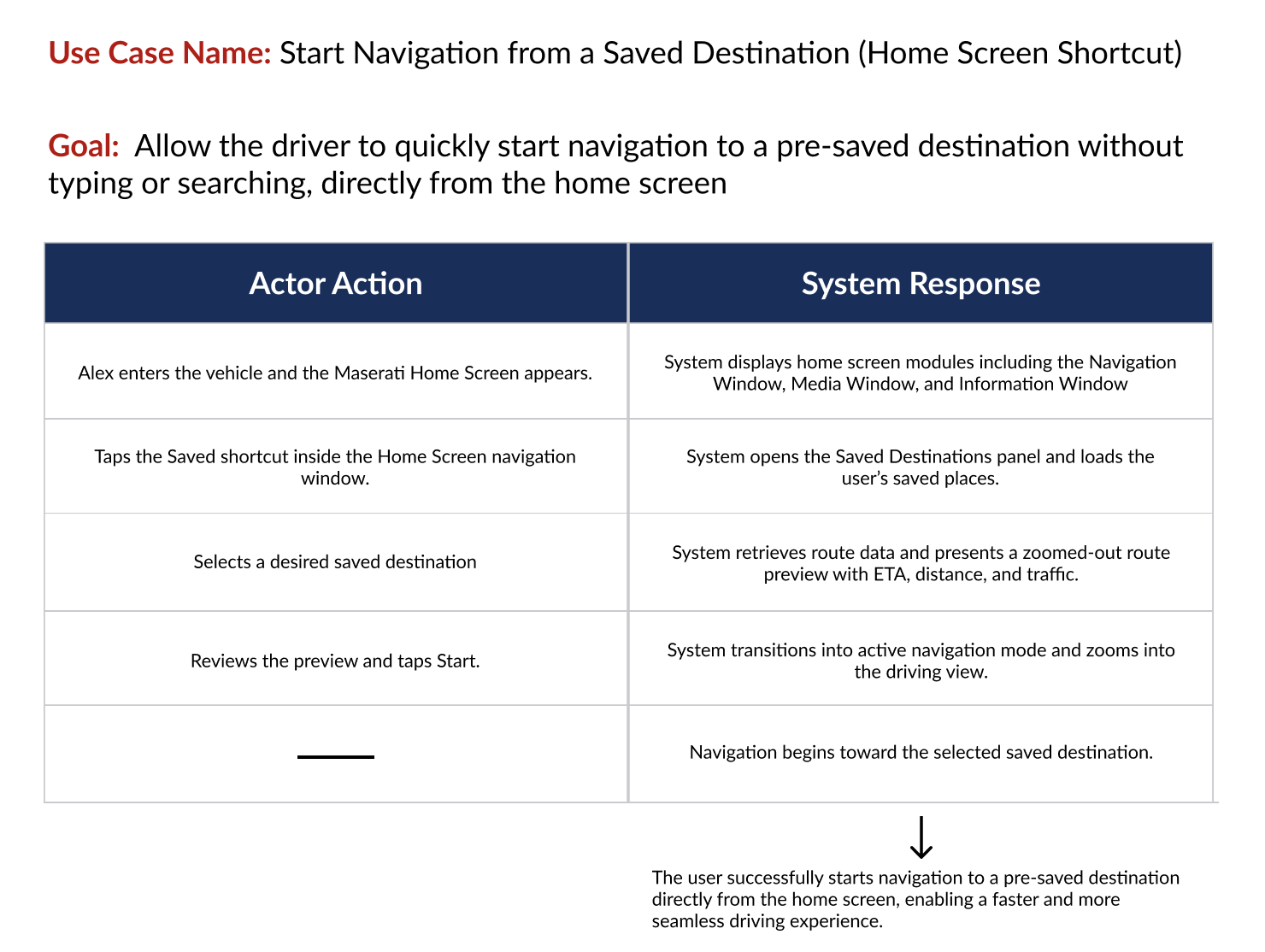
By redesigning the navigation flow on the Home Launch Screen, the system allows drivers to start navigation to saved destinations with fewer steps, supporting a smoother and more focused driving experience.
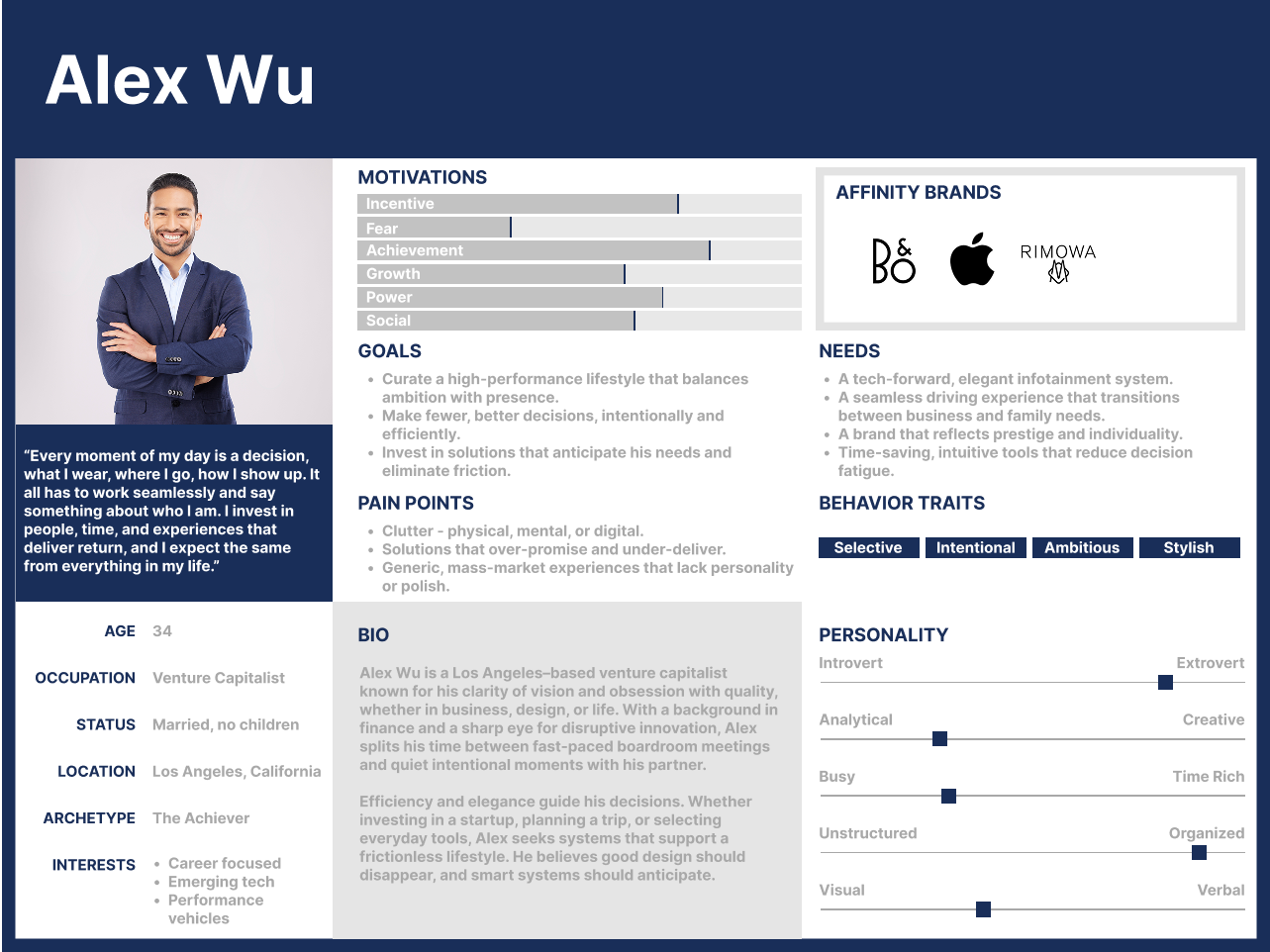
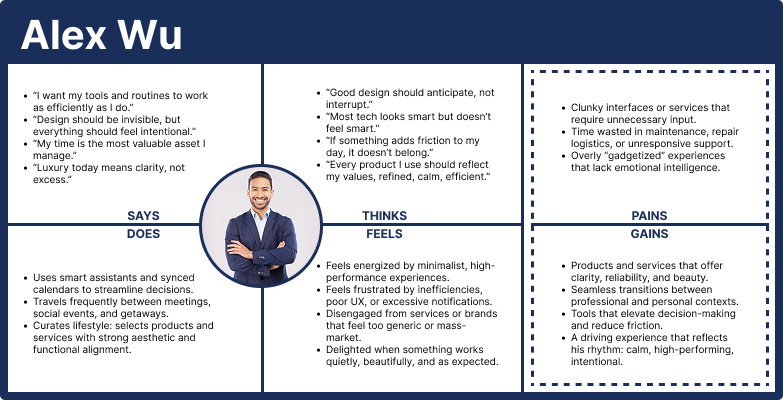
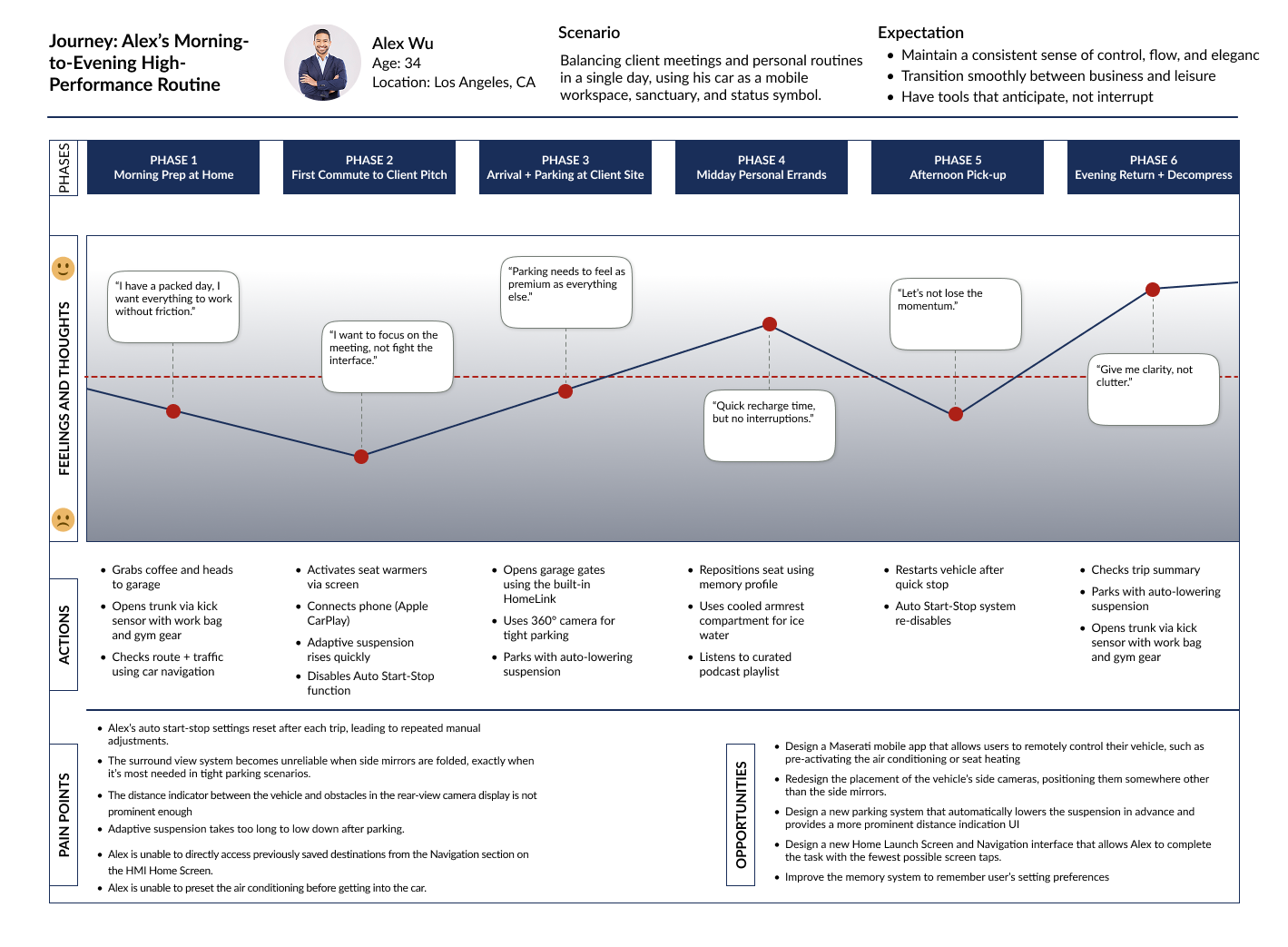
This project followed a user-centered design process focused on improving in-car navigation efficiency. It began with defining a clear problem through persona development and user journey mapping, identifying friction in accessing saved destinations. Based on these insights, low-fidelity wireframes were created to explore simplified navigation flows, followed by high-fidelity UI designs that emphasized clarity and minimal interaction. The designs were then validated through usability testing and refined into an interactive prototype demonstrating the final navigation experience.
Through this project, I developed a deeper understanding of designing for in-car HMI systems, where safety, speed, and minimal cognitive load are critical. I learned how to translate user pain points—such as inefficient access to saved destinations—into clear design opportunities through persona creation and user journey mapping.
I strengthened my ability to simplify complex interaction flows, reducing steps and optimizing navigation for real-world driving contexts. Additionally, I gained experience moving from low-fidelity wireframes to high-fidelity interfaces, ensuring consistency and clarity across the system.
Through usability testing, I learned how to validate design decisions with real user behavior, refining the interface to better support intuitive, distraction-free interactions. This project also enhanced my skills in balancing aesthetic design with functional usability, especially within the constraints of automotive environments.