
Graduates

Jess Hylek

MFA in Graphic Design - 2 Yr Path — Graduate Graphic Design
Course:
Communication Design 5: Publication
Faculty:
Tracey Shiffman
Term:
2025 Spring

Roots of Exile

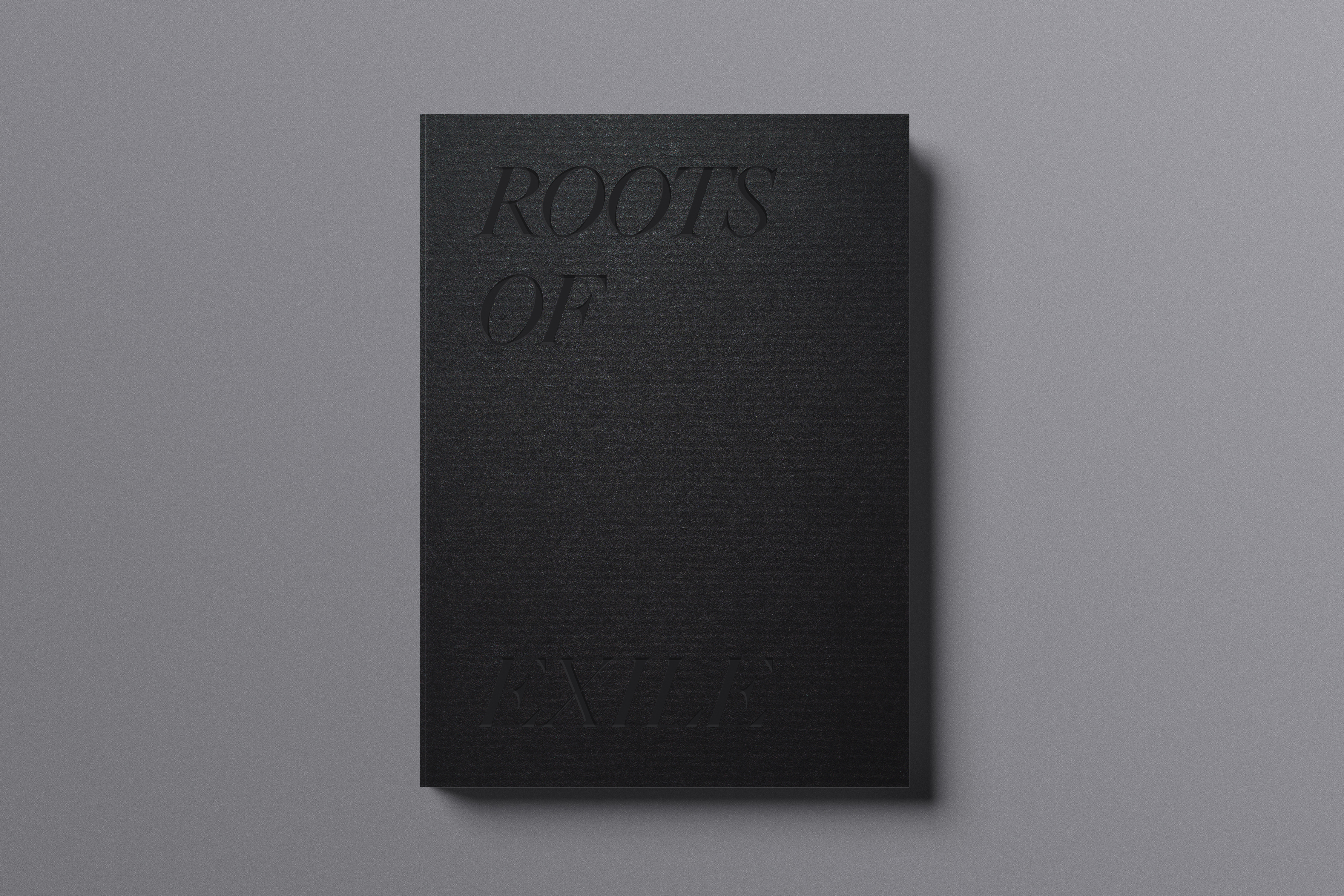
Roots of Exile is a 160-page publication exploring a 22,000-photo archive of pre-1948 Palestine held in the Library of Congress. The book traces a web of Palestinian history, colonization, and cultural resilience through the juxtaposition of archival photography and scholarly essays by Edward Said. Each typographic and structural choice holds tension between academic rigor and urgent documentation, treating design itself as a form of witness. A speculative AI motion campaign extends the project's themes into dialogue on digital ethics and visual colonization.

Process:

Discovered the Library of Congress American Colony Photo Department archive (1898–1946) while researching a social media post of pre-1948 Palestine photographs. Selected 240 images for the final book, preserving all original captions intact. Layered archival documentation with essays by Edward Said to recontextualize the colonial record in dialogue with lived Palestinian experience. Developed a speculative AI motion campaign using archival images to provoke dialogue on digital ethics and visual colonization.

Learning Outcomes:

Through Roots of Exile, I deepened my understanding of design as a form of authorship, where every structural, typographic, and pacing decision is also an argument. Working with politically and emotionally charged historical material taught me how to navigate research with rigor and care, and how to let that research shape form rather than simply illustrate it. I learned that constraints can be tools: the grid exists to be broken when language alone can no longer carry the weight of the story. Engaging with Edward Said's postcolonial theory pushed me to think critically about whose perspectives are centered in archival design, and how juxtaposition can reframe power dynamics without editorializing. 

Extending the project into a speculative AI motion campaign showed me how design thinking can enter emerging ethical conversations around technology and representation. Seeing this work live beyond the classroom—presenting it with my class at the YODEX design conference, in the ArtCenter gallery, and as concert visuals for Lina Makoul—affirmed that design made with intention and specificity has the capacity to build bridges and spark real dialogue.

Tags:
Publication Design,
Research-Based Design,
Storytelling,
Typography
Image
Cover design features the title embossed on a dark textured paper; visible only when you tilt the book to catch the light.
Video file
240 images weave a history of erasure and resilience from a 22,000 photograph archive of pre-1948 Palestine from the Library of Congress American Colony Photo Department (1898–1946).
Image
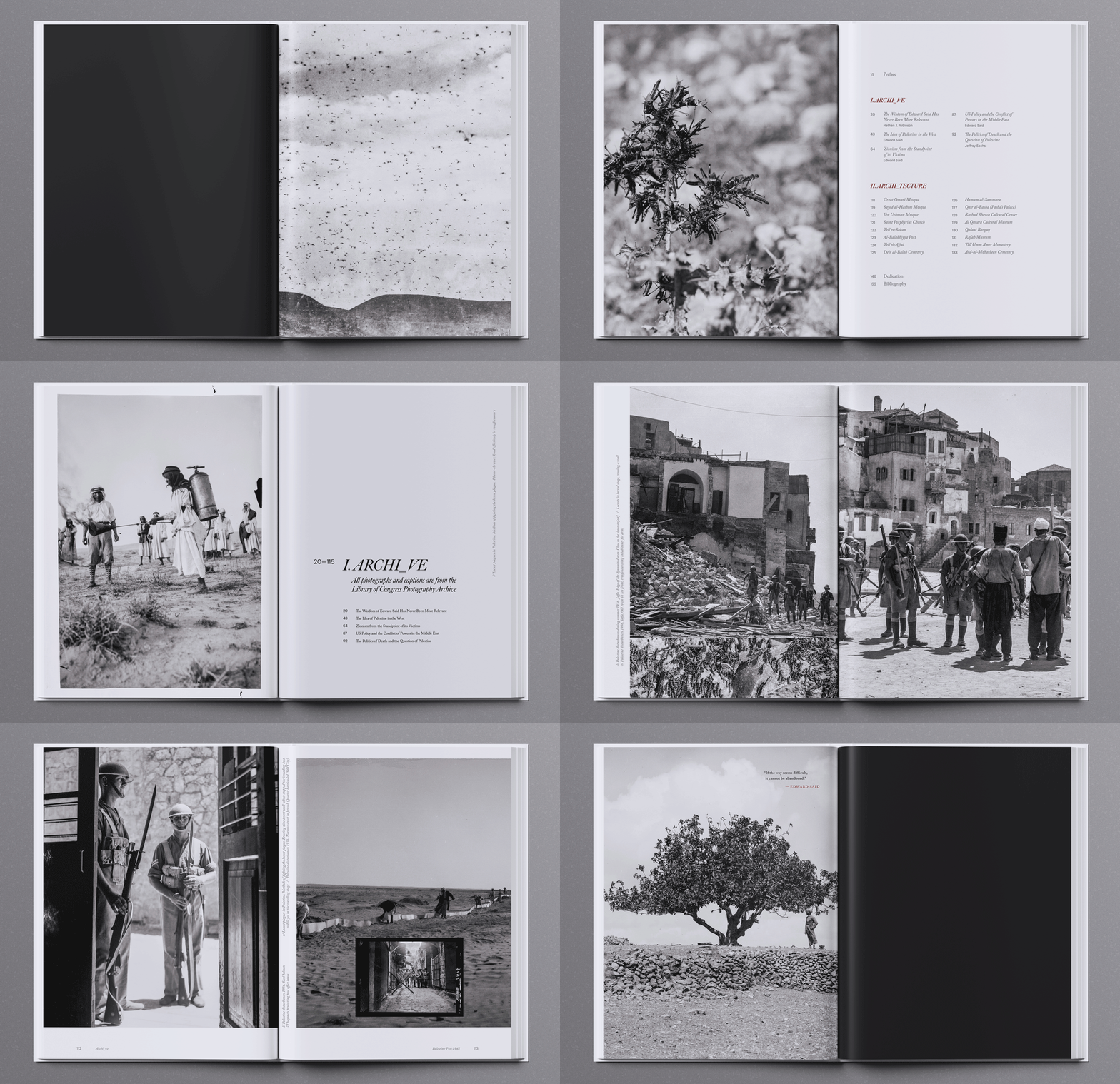
A locust plague documented in the archive became the book's central metaphor; a symbol of destruction and regrowth that frames the narrative's opening and close.
Image
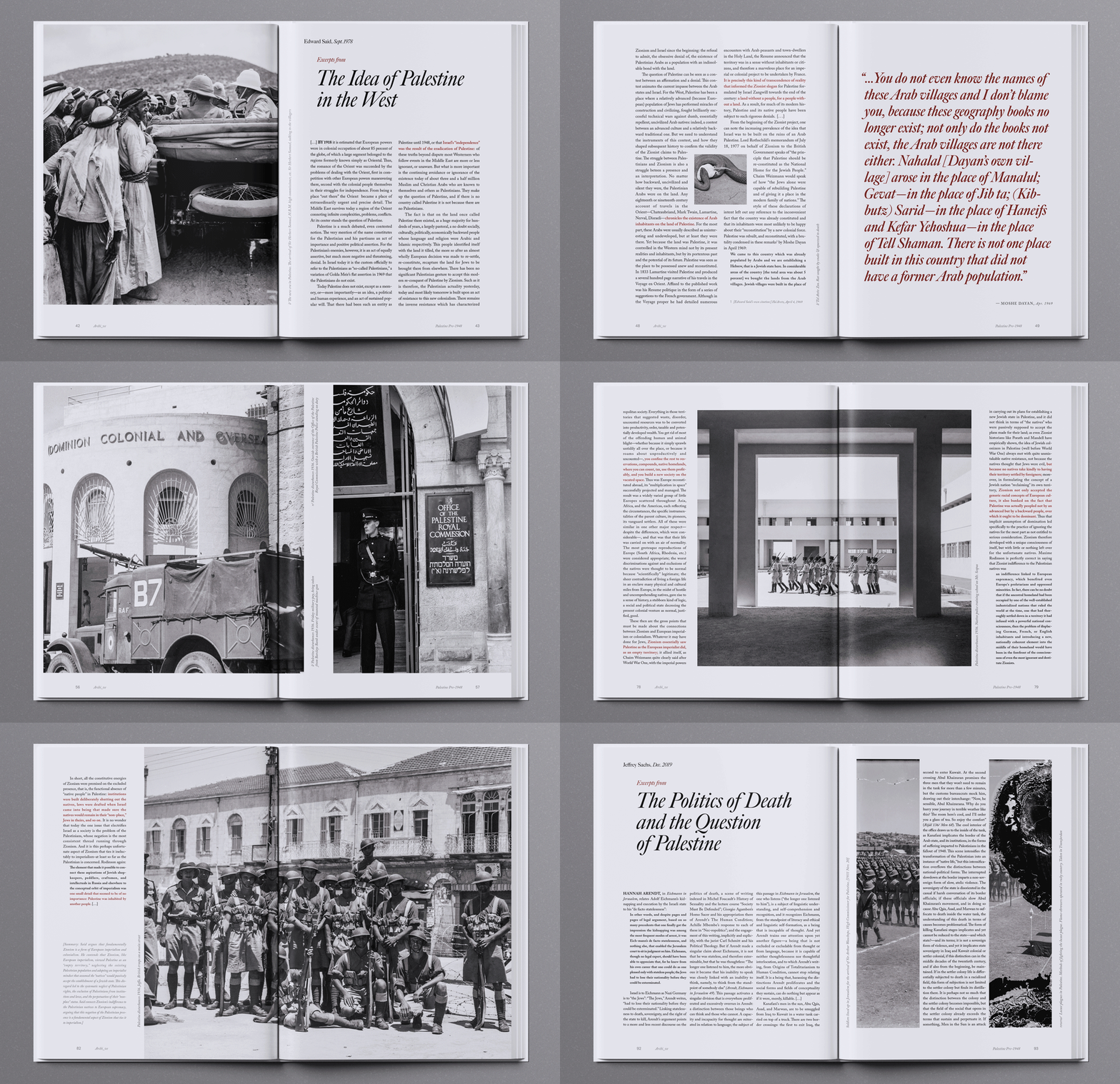
The book's design is scholarly and elegant, while carrying urgent political weight. Archival photographs are juxtaposed with Edward Said's essays on Orientalism and Palestinian identity.
Image
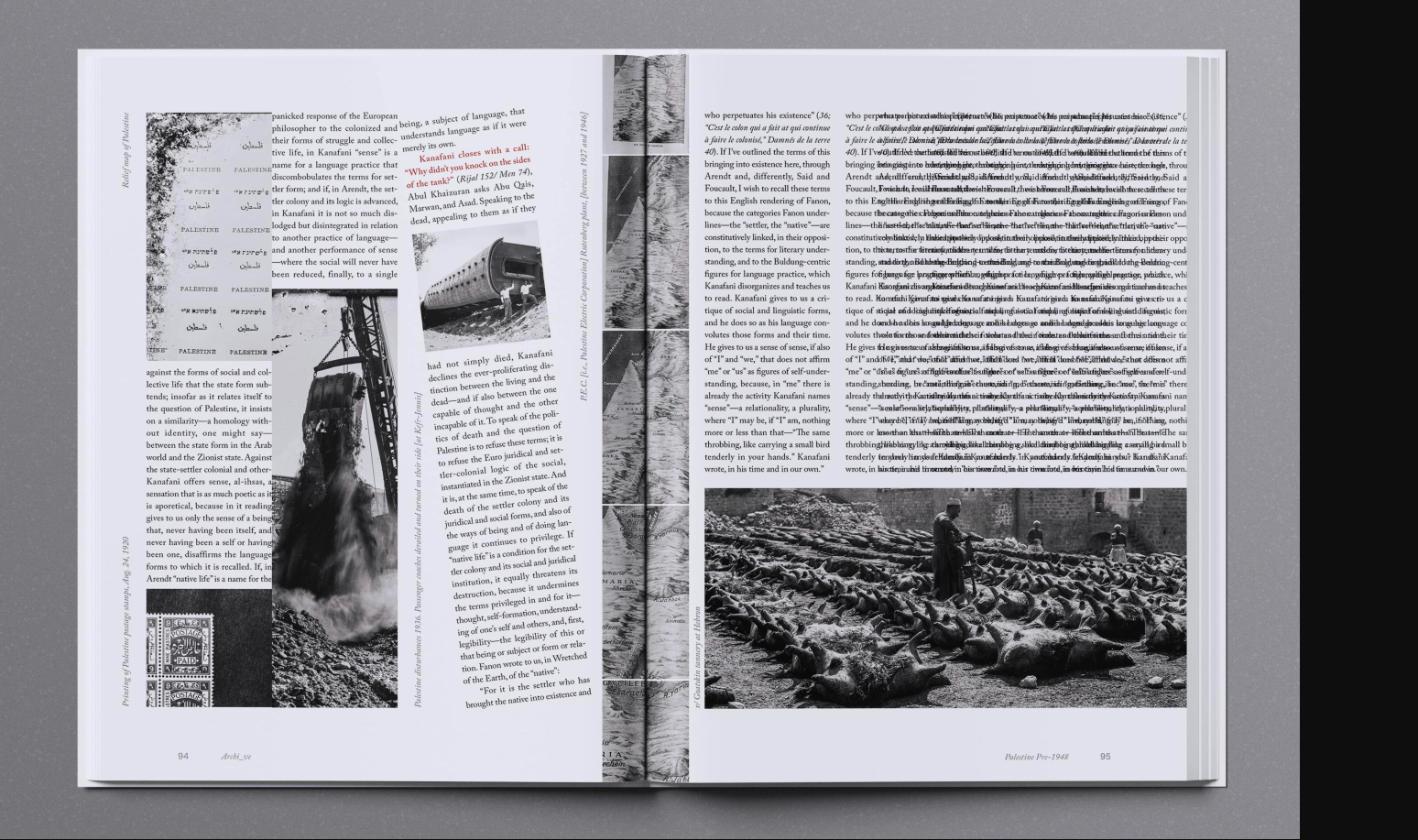
As colonial violence becomes more overt, the design breaks the grid and abandons restraint to express what language cannot: the exasperation that documentation alone cannot compel recognition of this history.
Image
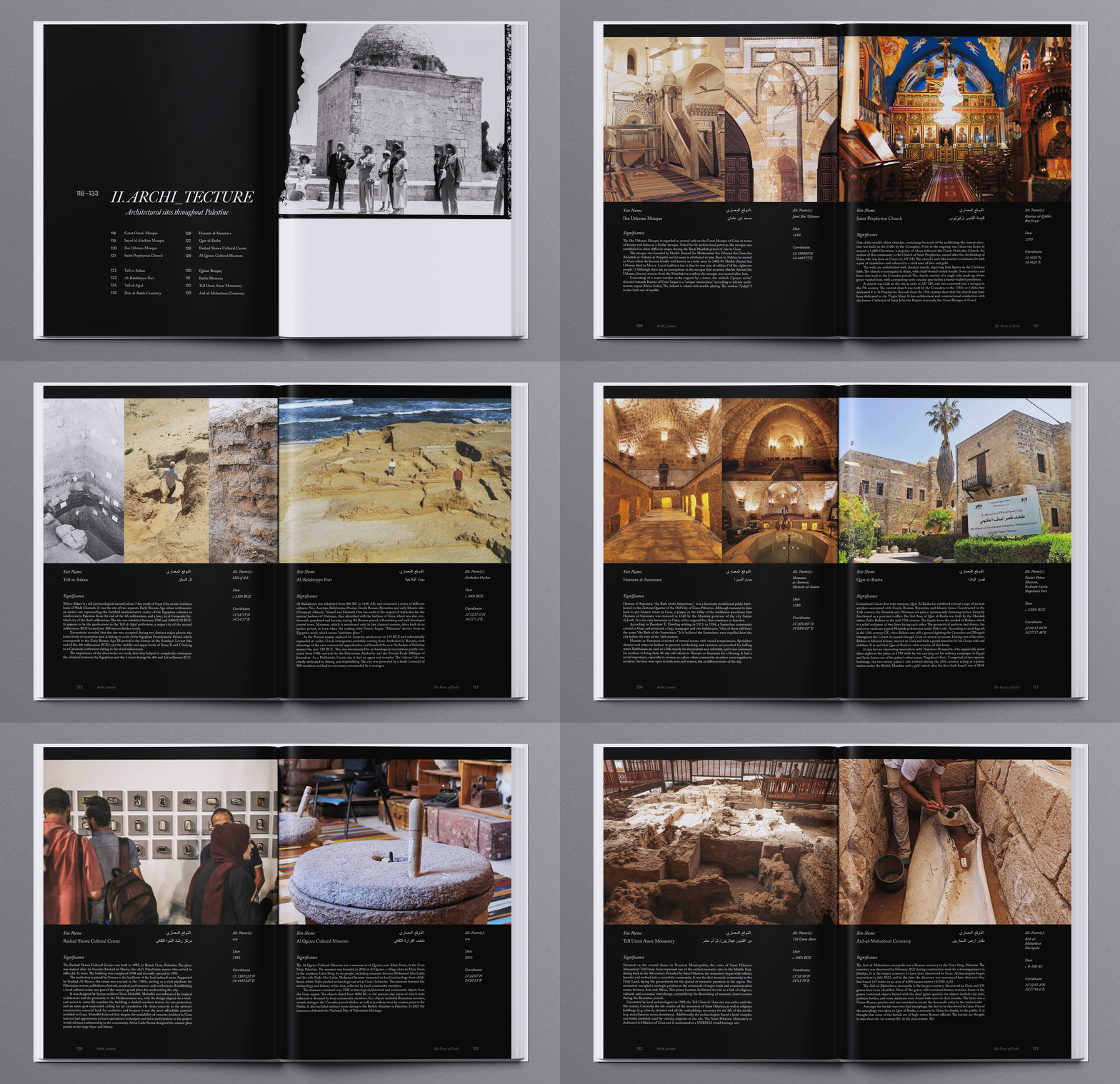
The second section details 16 architectural sites throughout Palestine, some dating to 2000 BCE. Each site represents a layer of architectural memory of Palestinian culture, heritage, and historic legacy.
Image
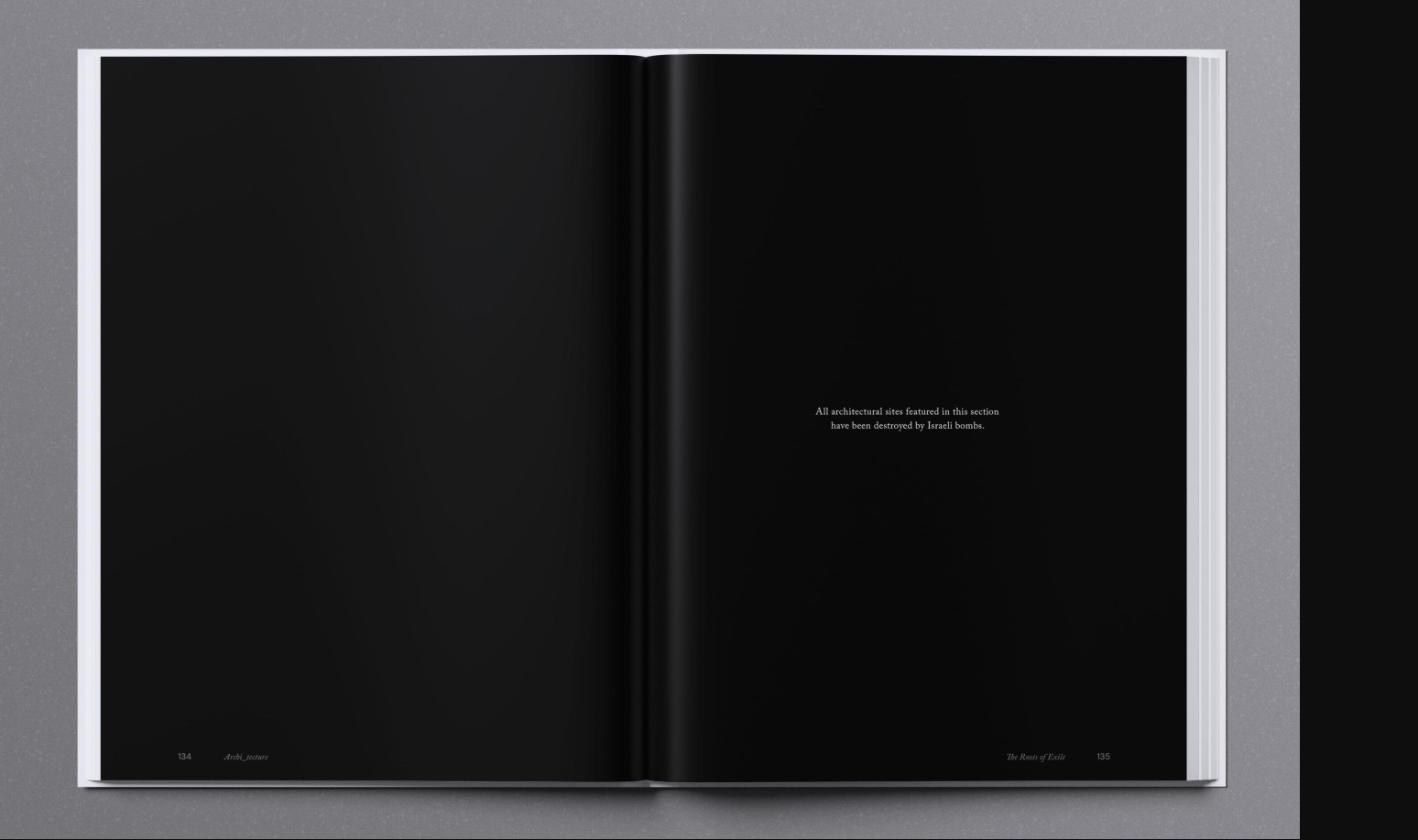
Design as a mirror for reality: the section ends abruptly with a stark black spread. "All architectural sites featured in this section have been destroyed by Israeli bombs." Design becomes documentation of erasure.
Image
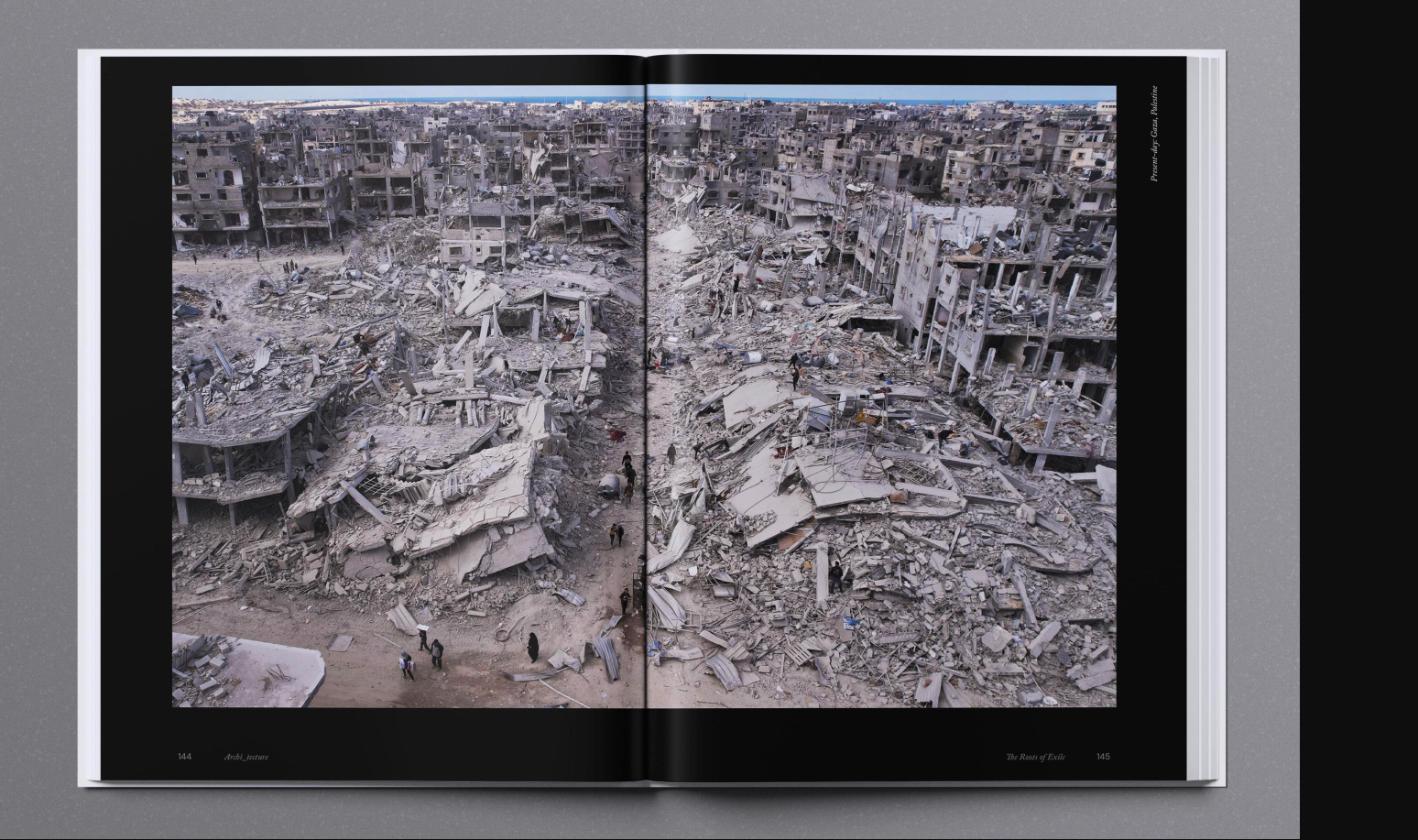
Present-day Gaza, Palestine: closing spreads feature contemporary documentation of destruction to bridge history and present reality.
Image
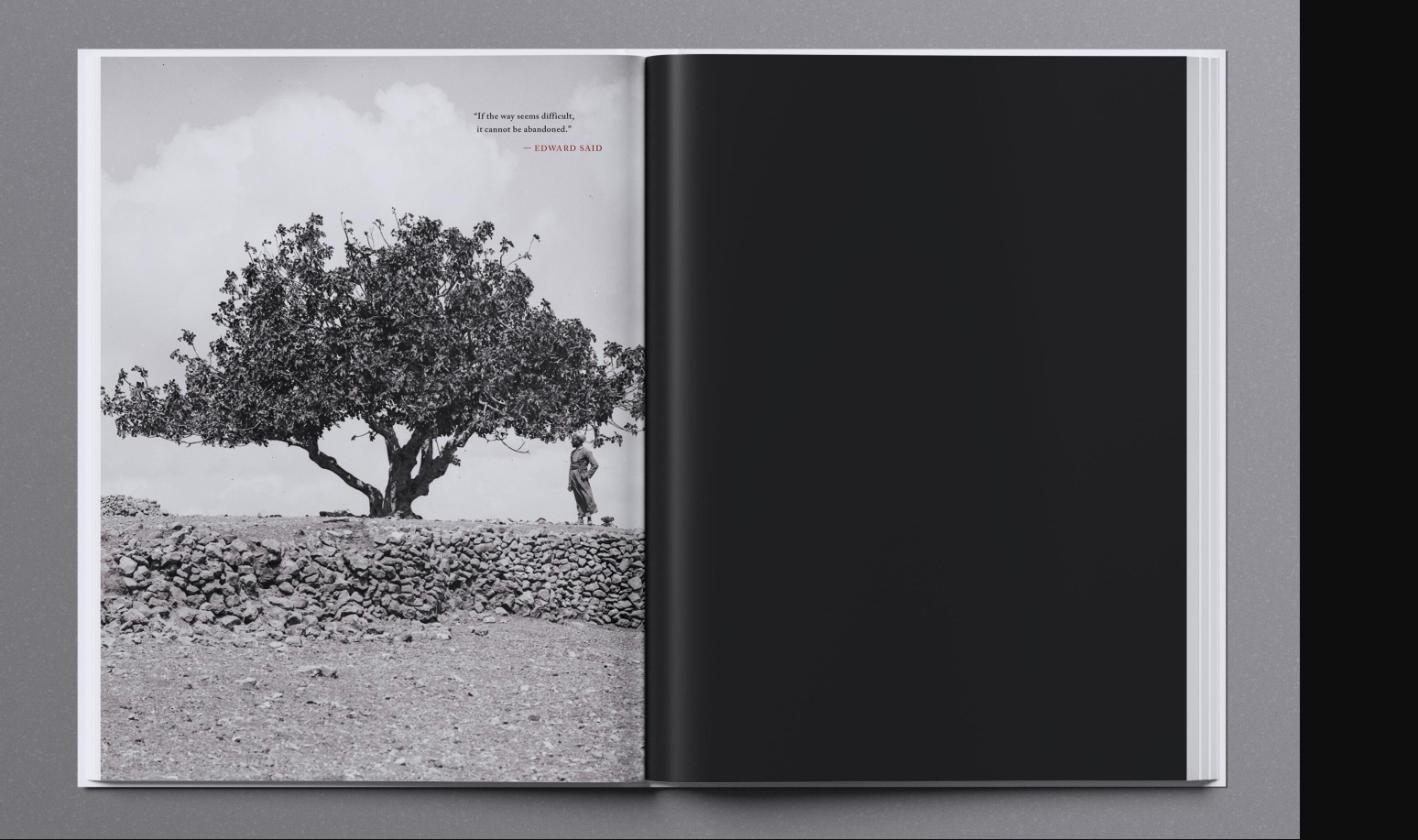
End page: "If the way seems difficult, it cannot be abandoned" —Edward Said. The book closes with this archival image: a figure beneath the same tree from the opening spreads having been stripped of leaves and now showing regrowth, returning to the book's opening metaphor of roots, resilience, and continuity.
Image
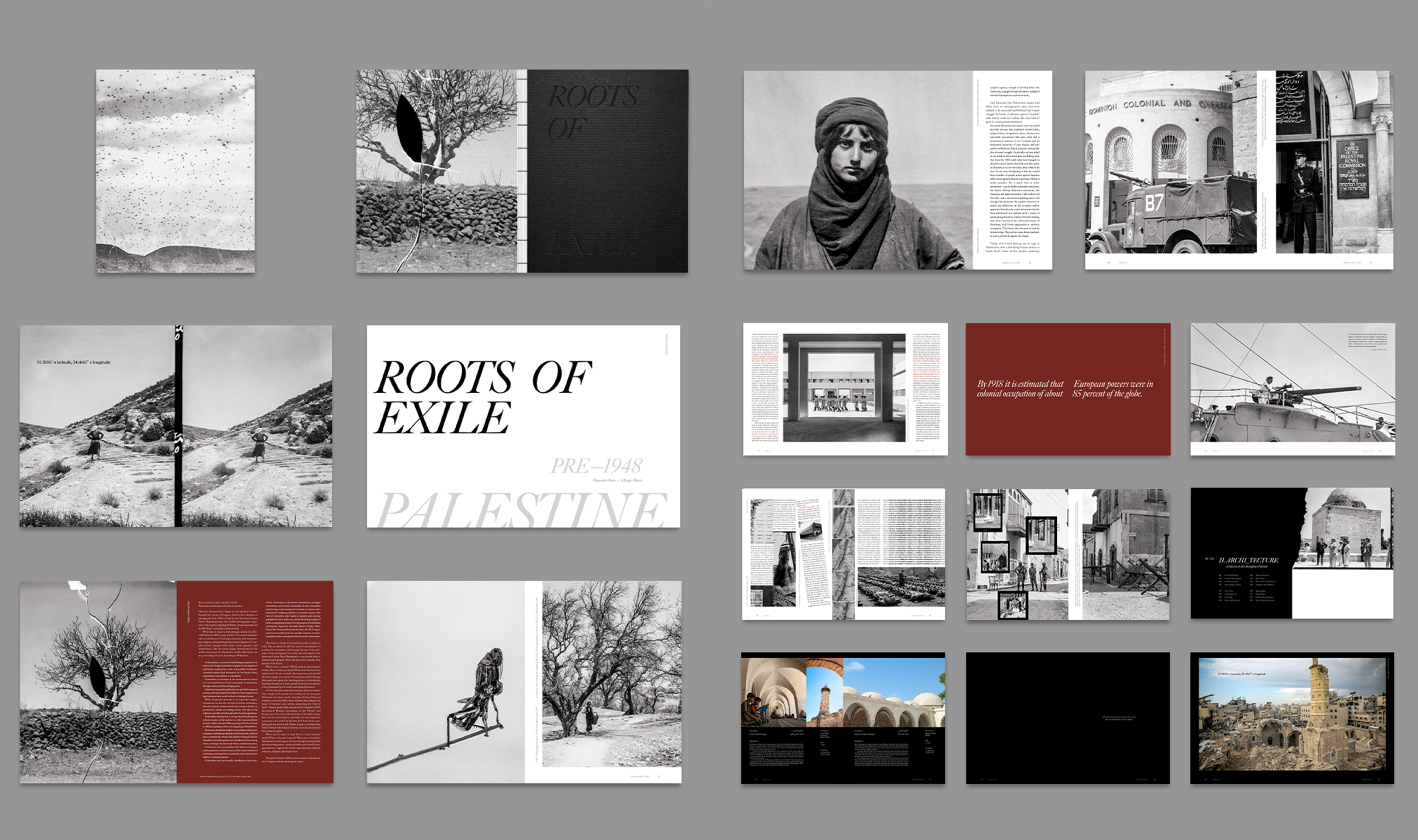
Book interior spreads showing the range of the 160-page publication design from quiet archival to structural breakdown through present-day reality.
Image
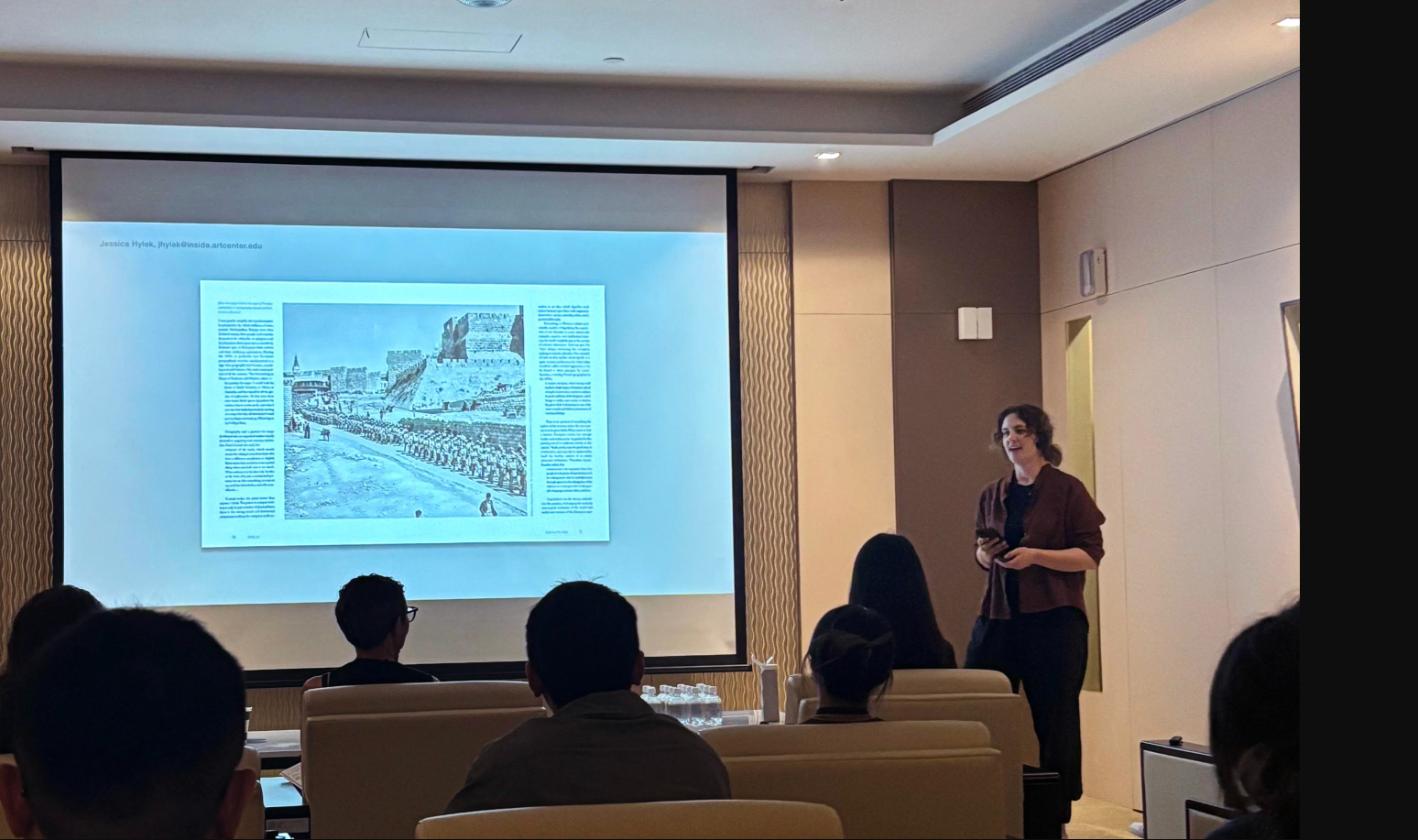
Impact: I presented the book design with fellow ArtCenter grads at the YODEX Design Conference in Taipei. Roots of Exile has lived beyond the classroom, building bridges and sparking meaningful dialogue.
Image
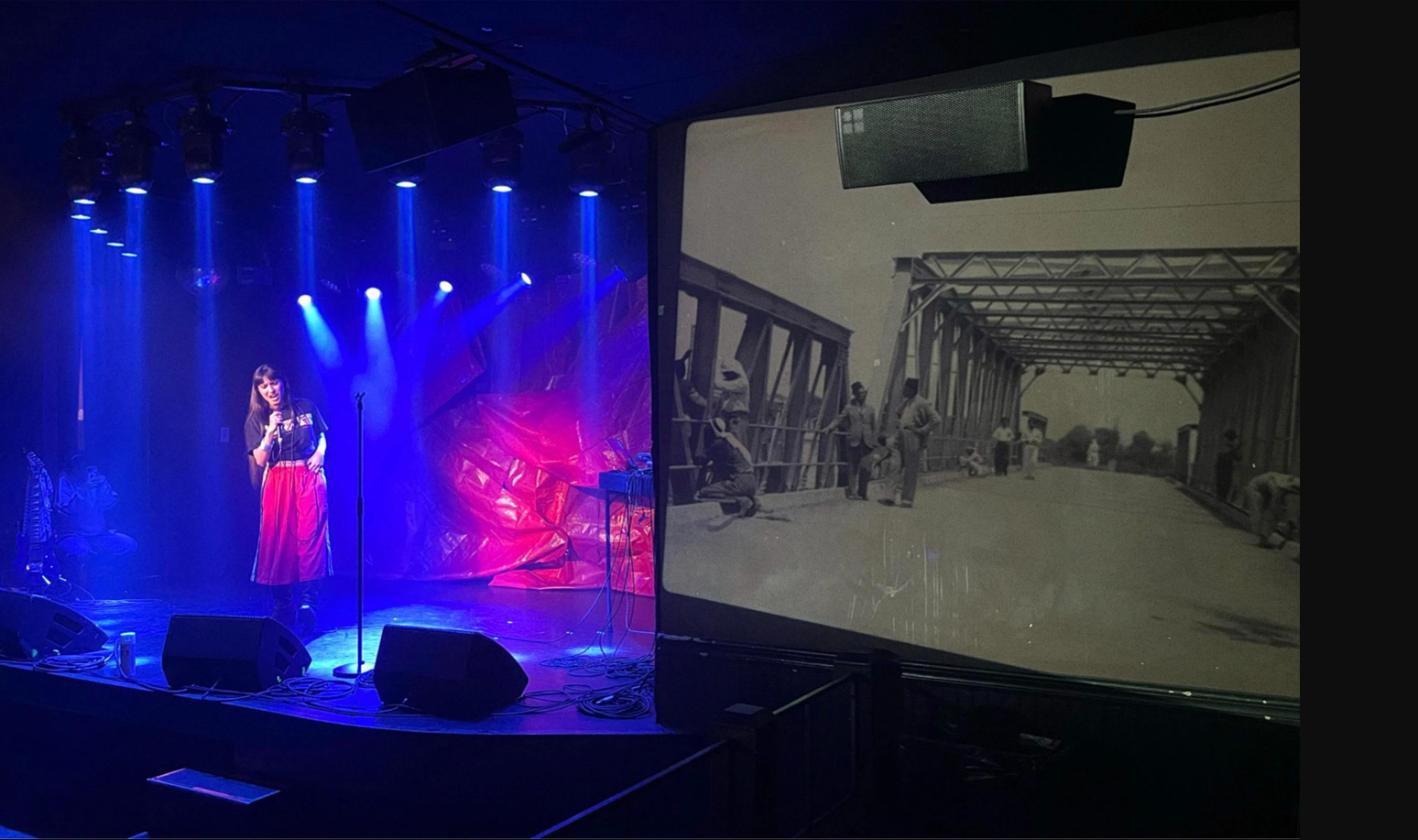
Impact: Roots of Exile served as concert visuals for Palestinian artist Lina Makoul, with archival photographs projected as live backdrop.
Image
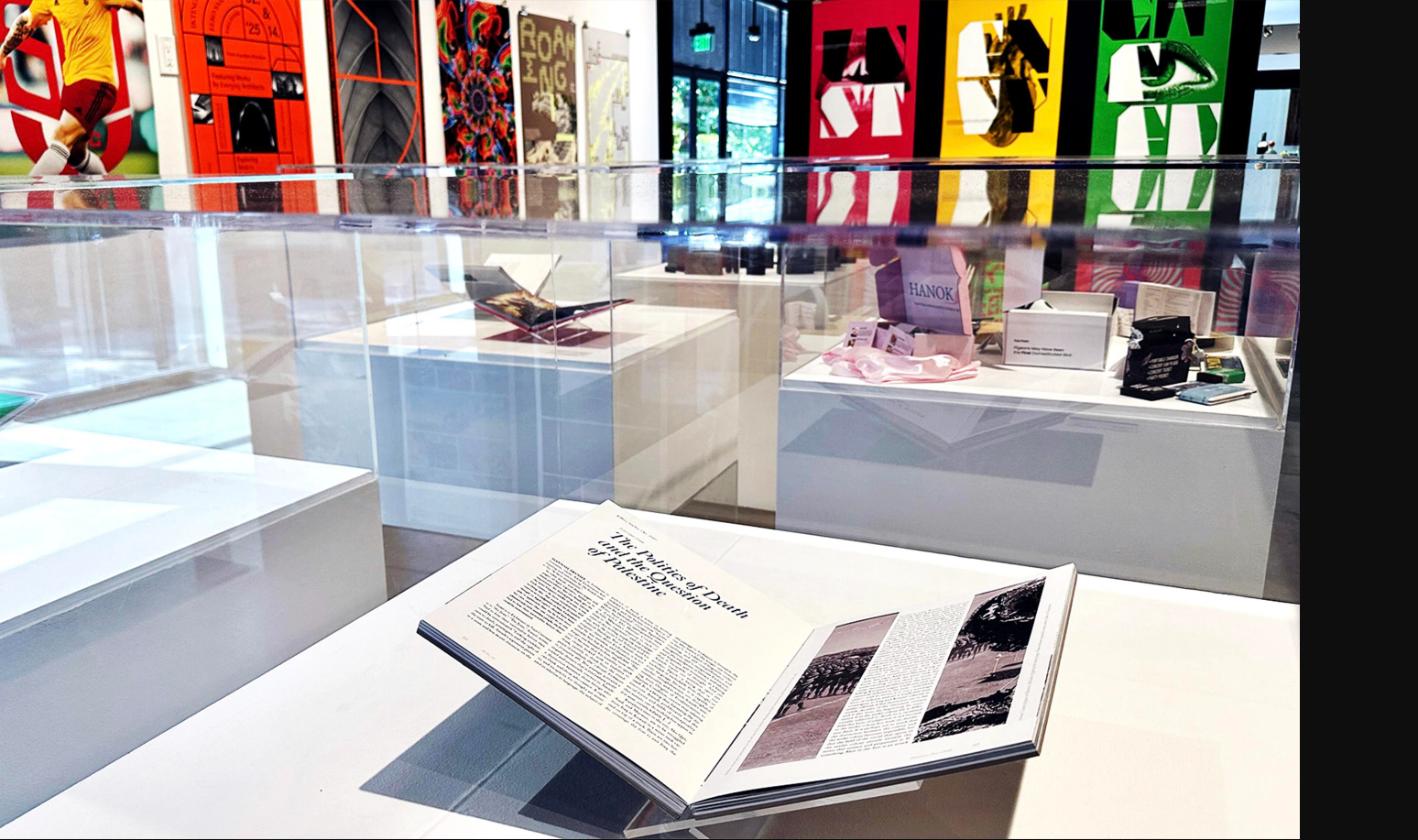
Impact: Roots of Exile was exhibited for multiple terms in the ArtCenter gallery.